
Recyclable Carrier Tape Packaging: Materials, Benefits & Selection Guide
Electronic component manufacturers are under increasing pressure to reduce packaging waste without compromising component protection or automated assembly performance. This has made recyclable carrier tape packaging an important topic for semiconductor companies, passive component manufacturers, distributors, and SMT production facilities.
However, selecting sustainable packaging is not as simple as replacing plastic carrier tape with paper. The recyclability of a tape-and-reel package depends on the carrier tape material, cover tape construction, reel type, coatings, adhesives, contamination, and available recycling infrastructure.
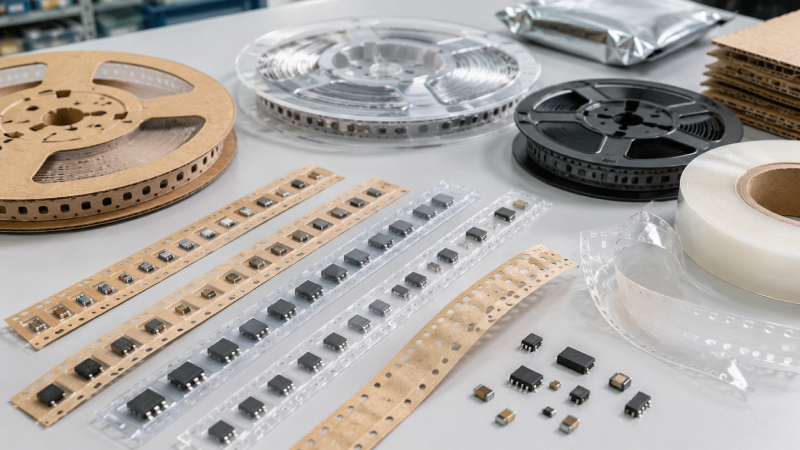
A packaging material may be technically recyclable but still be difficult to collect or process in the buyer’s local market. For this reason, companies should evaluate environmental performance together with component protection, ESD requirements, sealing quality, and feeder reliability.
What Is Recyclable Carrier Tape Packaging?
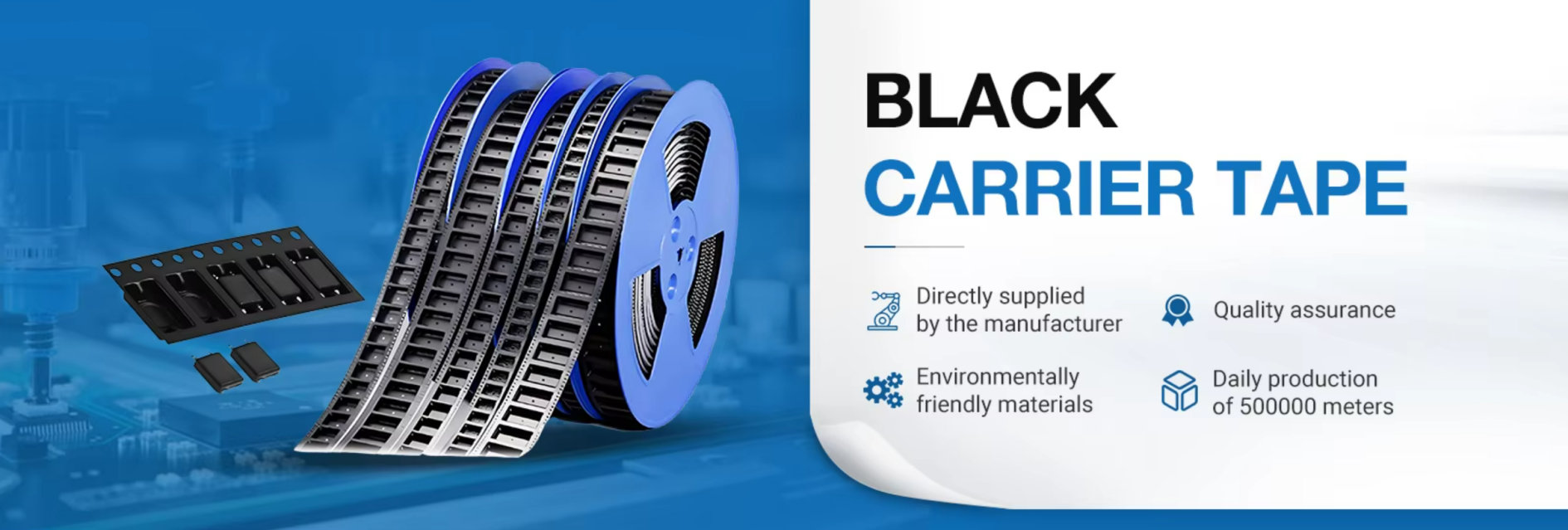
Carrier tape is a continuous packaging material with precisely formed pockets that hold electronic components in a controlled orientation. After components are loaded into the pockets, cover tape is applied to seal them in place. The finished tape is then wound onto a reel for storage, transportation, and automatic feeding into pick-and-place equipment.
Recyclable carrier tape packaging refers to a tape-and-reel system designed to reduce waste and improve material recovery after use. The complete system may include:
-
Paper or plastic carrier tape
-
Heat-activated or pressure-sensitive cover tape
-
Plastic or paper reels
-
Labels
-
Protective bags and outer cartons
It is important to distinguish between technically recyclable and practically recyclable packaging.
A technically recyclable material can theoretically be processed into a reusable raw material. A practically recyclable material can also be collected, identified, separated, and accepted by an available recycling facility.
This distinction matters because a recyclable carrier tape combined with an inseparable multilayer cover tape or contaminated reel may still become general industrial waste.
Why Electronics Companies Are Reviewing Carrier Tape Waste
Tape-and-reel packaging is widely used throughout the electronics supply chain. Large production volumes can generate significant quantities of empty carrier tape, cover tape, and reels.
Companies are reviewing this waste for several reasons:
-
Corporate sustainability and waste-reduction targets
-
Environmental requirements from downstream customers
-
Supplier qualification and ESG assessments
-
Increasing packaging disposal costs
-
Regulations affecting packaging design and recyclability
-
Demand for more transparent material documentation
-
Pressure to reduce unnecessary plastic consumption
For international suppliers, packaging decisions may also influence whether they can meet the procurement requirements of large electronics brands.
At the same time, sustainability improvements must not increase component damage, placement errors, or production downtime. A packaging change that creates feeder interruptions or rejected components may produce more waste than it eliminates.
The objective should therefore be to reduce packaging impact while preserving reliable performance throughout loading, transportation, storage, and SMT assembly.
Which Parts of Tape-and-Reel Packaging Can Be Recycled?
The recyclability of a tape-and-reel package should be evaluated component by component.
Paper Carrier Tape
Paper carrier tape is commonly used for small passive electronic components such as resistors, capacitors, and inductors. It may be easier to process through existing paper recycling systems when it contains limited coatings, adhesives, or laminated layers.
However, not all paper carrier tapes are identical. Surface treatments, conductive additives, bonding layers, and contamination can affect whether the used tape is accepted by a recycler.
Plastic Carrier Tape
Plastic carrier tapes are commonly manufactured from materials such as polystyrene, polycarbonate, PET-based structures, or other thermoplastics.
These materials may be technically recyclable, but successful recycling usually requires separation by polymer type. Small volumes, mixed plastics, conductive additives, and limited industrial collection programs can make practical recycling difficult.
Cover Tape
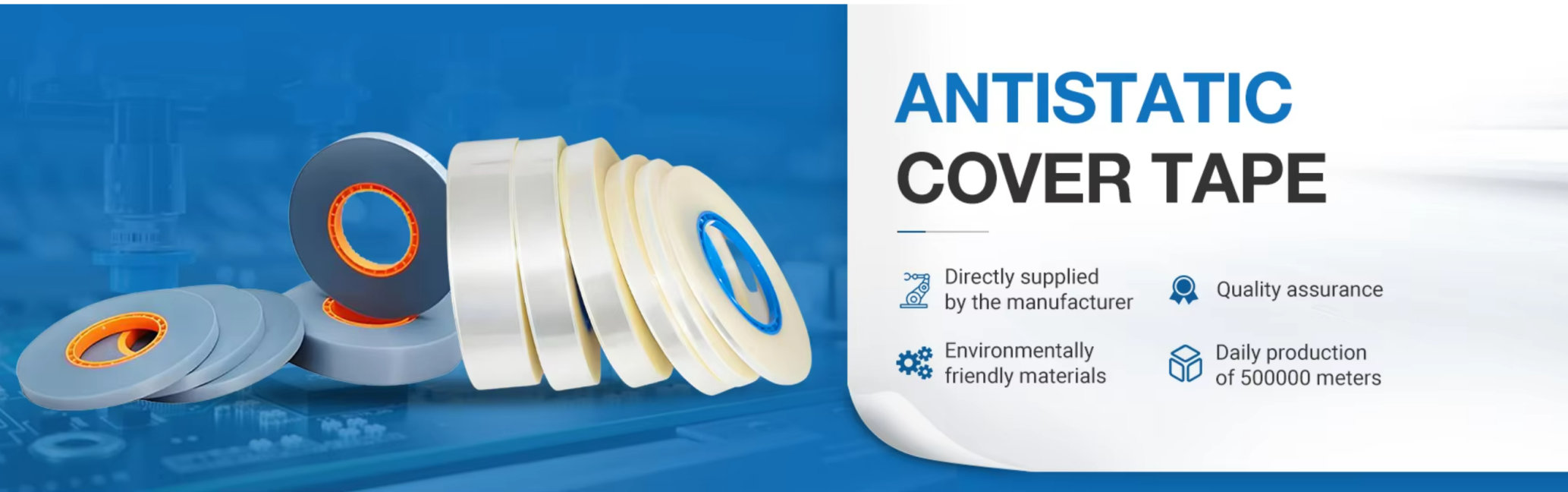
Cover tape is often one of the most challenging parts of the package. It may contain several layers, including a base film, sealing layer, antistatic treatment, and adhesive.
Even when the primary film is recyclable, adhesive residue or multilayer construction may reduce its recycling value. Easy separation from the carrier tape can improve waste sorting, but buyers should still confirm acceptance with their recycling contractor.
Reels
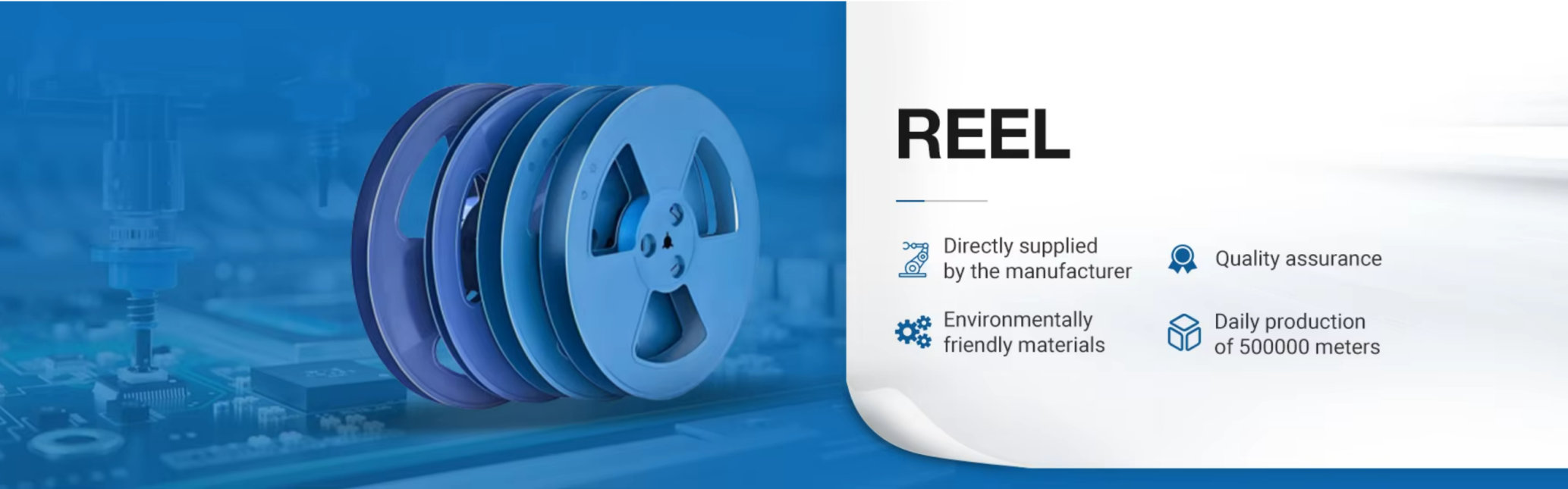
Component reels may be made from plastic, paperboard, or composite materials. Clean and undamaged reels may sometimes be reused within a closed-loop supply chain.
Where reuse is not possible, reels should be separated by material type before recycling. Labels, adhesive residue, and mixed-material hubs may need to be removed.
Paper vs. Plastic Carrier Tape
Paper and plastic carrier tapes both have environmental and technical advantages. The best option depends on the component and application.
When Paper Carrier Tape Is Suitable
Paper carrier tape can be an effective solution for small, regular-shaped components with shallow pocket requirements. Common applications include chip resistors, ceramic capacitors, inductors, and other passive components.
Its potential advantages include:
-
Reduced use of conventional plastic
-
Compatibility with many paper recycling systems
-
Efficient high-volume processing
-
Good performance for shallow pocket designs
-
Lower material complexity in suitable applications
However, paper is sensitive to moisture and may not provide the same transparency, pocket depth, or forming flexibility as plastic. Dimensional stability must also be carefully controlled.
When Plastic Carrier Tape Is Necessary
Plastic carrier tape remains important for components that require deeper pockets, complex shapes, increased visibility, or specialized electrostatic protection.
It is commonly selected for:
-
Integrated circuits
-
Semiconductors
-
LEDs
-
Connectors
-
Sensors
-
Fragile components
-
Irregularly shaped parts
Plastic materials can provide precise pocket geometry, strong moisture resistance, and a wide range of conductive or static-dissipative properties.
Replacing plastic with paper without evaluating the component may lead to pocket deformation, poor retention, or unstable feeding. A sustainable material should only be selected when it can meet the full packaging specification.
Five Factors That Determine Real-World Recyclability
1. Material Construction
Mono-material packaging is generally easier to sort and process than packaging made from bonded layers.
When different materials cannot be separated, the entire package may be rejected by recycling facilities. Buyers should ask whether the carrier tape, coating, and support layers form a compatible recycling stream.
2. Coatings and Conductive Additives
Carrier tape may require conductive, antistatic, or static-dissipative properties to protect sensitive components.
These properties are often achieved through material additives or surface treatments. Although necessary for performance, they may affect recycling compatibility. Suppliers should clearly identify the material composition and ESD treatment method.
3. Cover Tape and Adhesive Separation
Cover tape should peel consistently during component placement, but the adhesive or heat-seal layer may remain attached to the carrier tape.
If the two materials cannot be separated cleanly, recycling becomes more complicated. Peel performance and end-of-life separation should therefore both be considered during material selection.
4. Local Recycling Infrastructure
A material marked as recyclable may not be accepted in every country or region.
Some recycling facilities only accept large, clean, single-polymer waste streams. Others may not accept small electronic packaging materials at all. Buyers should contact their recycler before making broad recyclability claims.
5. Cleanliness and Collection Volume
Used packaging contaminated with oil, dust, component residue, or mixed waste may be unsuitable for recycling.
Collection volume also matters. A small amount of mixed carrier tape may not be economically practical to process, while a large, consistently sorted waste stream may be more attractive to an industrial recycler.
Recyclability Must Not Reduce SMT Performance
Carrier tape is part of an automated production system. Even minor dimensional or material inconsistencies can disrupt the pick-and-place process.
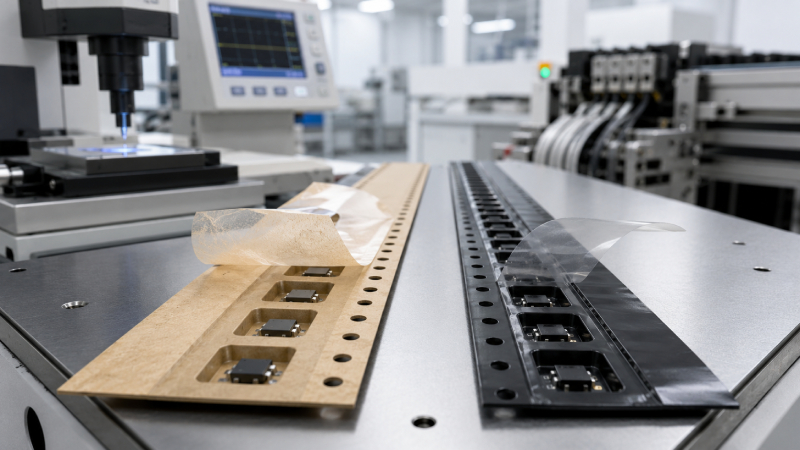
Before adopting a recyclable packaging material, buyers should evaluate:
-
Pocket length, width, and depth
-
Component fit and clearance
-
Pocket pitch accuracy
-
Sprocket-hole position
-
Carrier tape thickness
-
Tensile strength
-
Cover tape seal integrity
-
Peel-force consistency
-
ESD performance
-
Feeder compatibility
-
Storage stability
-
Transportation resistance
Poorly matched packaging can allow components to rotate, flip, jump out of pockets, or become damaged during handling.
Unstable cover tape peel force may cause machine stoppages. Excessive peel force can lift the carrier tape or disturb components, while insufficient sealing may expose parts during transportation.
Paper materials should also be tested under expected humidity and storage conditions. Plastic materials should be evaluated for pocket deformation, static performance, and dimensional stability.
Sample testing is essential before bulk production.
Choosing Packaging for Different Components
Small passive components are often the strongest candidates for paper carrier tape. Their regular geometry and shallow pocket requirements can allow a relatively simple packaging structure.
LEDs and optoelectronic components require additional evaluation. Their surfaces may be sensitive to scratching, contamination, or contact pressure. Visibility and ESD protection may also influence material selection.
Integrated circuits, semiconductors, connectors, and sensors frequently require plastic carrier tape because of deeper pockets, tighter tolerances, and conductive material requirements.
Custom or irregular components should be evaluated individually. A supplier may need the component drawing, 3D file, physical samples, packaging orientation, and feeder information before developing the pocket.
The lowest-impact solution is not always the material with the lowest plastic content. It is the packaging system that protects the component, runs reliably, and creates the least total waste throughout the supply chain.
Buyer Checklist for Evaluating a Supplier
Before purchasing recyclable carrier tape packaging, buyers should ask the supplier:
-
What is the exact carrier tape material?
-
Is the structure mono-material or multilayer?
-
Are coatings, laminations, or conductive additives used?
-
What ESD performance can the material provide?
-
Can the cover tape be separated from the carrier tape?
-
What type of adhesive or sealing layer is used?
-
Is recycled content available?
-
Can material or environmental documentation be provided?
-
Has the tape been tested with similar components?
-
Can custom pocket samples be produced?
-
How are pocket dimensions and pitch inspected?
-
Can feeder testing be completed before bulk production?
-
Can the reel, carrier tape, and cover tape be collected separately?
-
Are recycling limitations clearly documented?
Buyers should be cautious when a supplier describes packaging as “100% recyclable” without identifying the material, end-of-life route, or regional limitations.
Transparent documentation is more valuable than a broad environmental claim.
How Jiushuo Supports More Sustainable Packaging
Jiushuo provides paper and plastic carrier tape solutions for different electronic component requirements.
The selection process can include component geometry review, pocket design, ESD evaluation, cover tape matching, dimensional inspection, sample production, and packaging testing.
Available solutions may include:
-
Paper carrier tape for suitable passive components
-
Conductive and antistatic plastic carrier tape
-
Custom pocket development
-
Compatible cover tape selection
-
Reel and complete tape-and-reel supply
-
Sample testing before volume production
-
Dimensional and visual quality inspection
Jiushuo does not recommend replacing plastic with paper for every application. The packaging material should be selected according to the component shape, pocket depth, ESD sensitivity, storage conditions, and SMT feeding requirements.
This application-based approach helps buyers improve packaging sustainability without introducing unnecessary production risk.
Frequently Asked Questions
Is carrier tape recyclable?
Some paper and thermoplastic carrier tapes may be recyclable. Actual recyclability depends on material composition, coatings, contamination, local collection systems, and recycling facility requirements.
Is paper carrier tape always more sustainable?
Not necessarily. Paper may reduce plastic consumption, but it must still provide adequate component protection and feeding performance. Product damage or production waste can offset the environmental benefits of changing materials.
Can conductive carrier tape be recycled?
Some conductive thermoplastic tapes may be technically recyclable. However, conductive additives can affect material processing, and local recyclers may have specific acceptance requirements.
Is cover tape recyclable?
Some cover tapes may be recyclable, but multilayer films, sealing layers, and adhesives can make processing difficult. The cover tape should be evaluated separately from the carrier tape.
Can carrier tape reels be reused?
Clean and undamaged reels may sometimes be reused through a return or closed-loop program. Otherwise, they should be separated according to their material and local recycling requirements.
How should recyclable carrier tape be tested?
Testing should include component fit, pocket dimensions, sealing strength, peel force, ESD behavior, storage stability, transportation performance, and feeder compatibility.
Conclusion
Recyclable carrier tape packaging is more than a choice between paper and plastic. The complete system—including carrier tape, cover tape, reel, coatings, adhesives, and recycling route—must be evaluated.
The right solution should reduce waste while protecting components and maintaining stable SMT production.
Companies considering a packaging change should begin with their component drawing, dimensions, annual volume, ESD requirements, storage conditions, and feeder specifications. Jiushuo can use this information to recommend and test a suitable carrier tape packaging solution before bulk production.



 Emial
Emial John Mr