


Paper Carrier Tape for Capacitors: Stable SMT Packaging Guide
Capacitors are among the most widely used passive components in electronic manufacturing. From consumer electronics and automotive modules to industrial controls and communication devices, capacitors are often supplied in high-volume tape-and-reel packaging for automated SMT assembly. Because these components are usually small, lightweight, and produced in large quantities, the quality of the carrier tape directly affects packaging consistency and feeding performance.
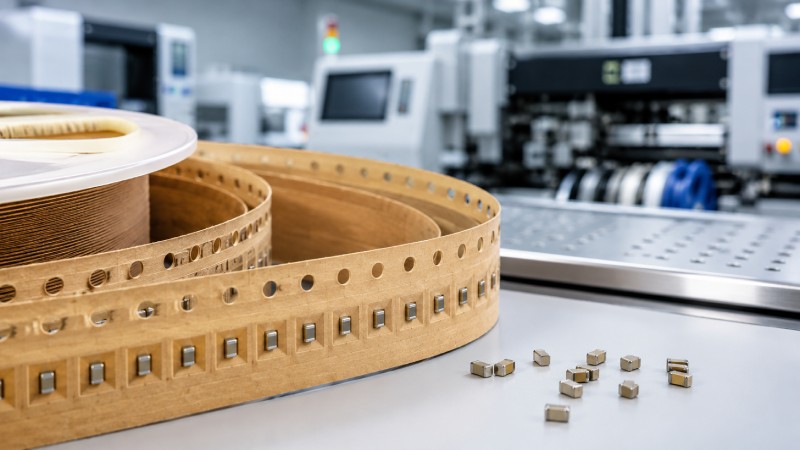
Paper carrier tape is commonly used for many small SMD capacitors, especially chip capacitors and multilayer ceramic capacitors. A well-designed paper carrier tape keeps each capacitor properly positioned, supports smooth reel unwinding, and helps SMT equipment pick components consistently. For capacitor manufacturers and component suppliers, choosing the right paper carrier tape is not only about packaging cost. It is also about reducing feeding problems, protecting product quality, and improving customer confidence.
Why Capacitors Need Reliable Paper Carrier Tape
Although capacitors may look simple compared with complex ICs or sensors, they still require accurate and stable packaging. Small capacitor packages are often handled at high speed, and even a minor packaging issue can lead to production interruptions.
If the pocket is too loose, capacitors may rotate, tilt, or move during transportation and feeding. If the pocket is too tight, components may not load smoothly or may be difficult to pick during assembly. If the tape pitch is inconsistent, SMT feeders may not index the tape accurately. If the cover tape is not matched correctly, peeling may become unstable and cause pickup problems.
For capacitor suppliers, poor tape packaging can result in customer complaints, rejected reels, or additional inspection work. For SMT assembly teams, unstable packaging may lead to missing components, incorrect pickup, feeder alarms, or slower production speed. Reliable paper carrier tape helps reduce these risks by keeping capacitors in a consistent position from packaging to final placement.
In high-volume capacitor packaging, stability matters more than appearance alone. A clean, flat, and accurately punched paper tape can make the entire assembly process more predictable.
What Is Paper Carrier Tape for Capacitors?
Paper carrier tape is a precision tape used to hold small electronic components in fixed positions. For capacitors, the tape is designed with pockets or cavities that match the component size and shape. After the capacitors are placed into the pockets, a cover tape is sealed on top, and the finished tape is wound onto a reel for transportation and SMT feeding.
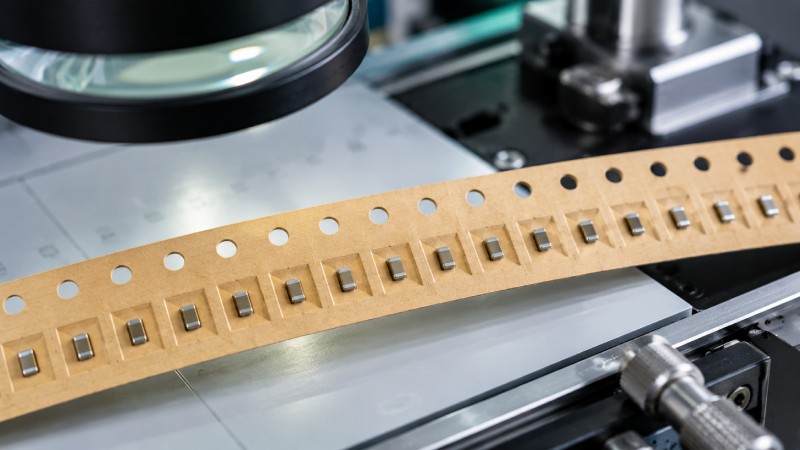
A typical capacitor paper carrier tape includes several important features. The pockets hold the capacitors. The sprocket holes allow the SMT feeder to pull and index the tape. The tape surface must support stable cover tape sealing. The reel structure keeps the tape properly wound during storage and shipping.
Paper carrier tape is often used for small, thin, and lightweight passive components. Compared with plastic embossed carrier tape, paper tape can be a practical choice when the component does not need a deep cavity or complex three-dimensional support. For taller, heavier, or irregular components, plastic embossed carrier tape may sometimes be more suitable. The final choice depends on the capacitor size, component thickness, packaging requirements, and customer assembly conditions.
Common Capacitor Types Packaged in Paper Carrier Tape
Paper carrier tape is widely used for many small capacitor packages. These include multilayer ceramic capacitors, chip ceramic capacitors, miniature SMD capacitors, and other passive capacitor components used in automated assembly.
For MLCCs, high-volume packaging consistency is especially important. These capacitors are small and are often assembled at very high speed. The tape must keep every component in a stable and repeatable position so that the placement machine can pick them accurately.
Chip capacitors also require proper orientation control. If a component shifts inside the pocket, it may not be presented correctly to the pickup nozzle. This can cause missing pickup or unstable placement. For thin capacitor packages, pocket depth consistency becomes important because the component must sit at a predictable height inside the tape.
Different capacitor types may look similar, but their packaging requirements can vary. The supplier should review the actual component size, tolerance, thickness, surface condition, and packaging volume before confirming the paper carrier tape design.
Key Design Factors for Capacitor Paper Carrier Tape
The performance of paper carrier tape depends on more than the base material. Pocket design, pitch accuracy, tape flatness, hole quality, and cover tape compatibility all influence the final packaging result.
Pocket Size and Component Fit
The pocket must fit the capacitor properly. If the pocket is too large, the component can move during reel winding, transportation, or SMT feeding. Movement inside the pocket may cause rotation, tilt, or unstable pickup. If the pocket is too small, the capacitor may not be loaded correctly, or it may create resistance during pickup.
A good pocket design should hold the capacitor securely while still allowing smooth loading and release. This balance is especially important for small capacitors, where even a small dimensional change can affect packaging performance.
Pocket Depth Consistency
Pocket depth affects how the capacitor sits inside the tape. If the pocket depth is inconsistent, some components may sit higher or lower than others. This can create pickup height variation during SMT assembly.
For high-speed production, consistent pickup height helps the placement machine operate smoothly. Capacitors should remain stable in the pocket but still be accessible to the pickup nozzle. Proper depth control helps reduce missing pickup and improves assembly reliability.
Pitch Accuracy
Pitch refers to the distance between pockets. In tape-and-reel packaging, pitch accuracy is critical because SMT feeders rely on consistent pocket spacing. If the pitch is unstable, the feeder may not present the capacitor at the correct position.
For capacitor reels used in high-speed placement, accurate pitch supports smooth indexing and reduces feeding interruptions. This is one of the most important quality points for buyers who supply capacitors to demanding electronics manufacturers.
Tape Flatness
Paper carrier tape should remain flat during packaging, winding, storage, and feeding. Poor flatness can cause the tape to run unevenly through the feeder. It may also affect how the cover tape is sealed or peeled.
Flat and stable tape helps improve reel quality and supports consistent feeding. This is especially important when the tape is used on high-speed SMT lines where small variations can lead to downtime.
Sprocket Hole Quality
Sprocket holes allow the feeder to pull the tape forward accurately. Clean and consistent sprocket holes help maintain smooth movement. Burrs, deformation, or inconsistent hole spacing may cause indexing problems.
For capacitor packaging, sprocket hole quality should be inspected carefully because it directly affects feeding stability. A good paper carrier tape supplier should control hole punching quality as part of the production process.
Cover Tape Compatibility
The cover tape must seal properly to the paper carrier tape. If the seal is too weak, capacitors may become loose during transportation. If the seal is too strong or uneven, peeling may become unstable during SMT feeding.
The right cover tape matching helps protect the capacitors while allowing smooth peeling at the assembly line. For capacitor suppliers, this is an important factor because many customer complaints are related not only to the carrier tape itself but also to the complete tape-and-reel packaging performance.
Paper Carrier Tape vs Plastic Carrier Tape for Capacitors
Both paper carrier tape and plastic embossed carrier tape can be used in electronic component packaging, but they are suited to different applications.
Paper carrier tape is often a strong choice for small passive components such as chip capacitors and MLCCs. It is practical for high-volume packaging, compact reels, and components that do not require deep or complex cavities. It can also support customers who are looking for paper-based packaging options for suitable components.
Plastic embossed carrier tape is usually selected when components need deeper pockets, stronger cavity support, or more complex shape control. It may be better for taller, heavier, or irregular components. Some components also require plastic tape because of specific protection, ESD, or mechanical requirements.
There is no single material that is best for every capacitor. The right choice depends on component size, thickness, protection needs, feeding conditions, and the requirements of the end customer. A professional supplier should evaluate the actual component before recommending paper tape or plastic embossed tape.
How Paper Carrier Tape Supports SMT Feeding Stability
SMT feeding stability is one of the most important reasons buyers care about carrier tape quality. A good paper carrier tape helps present each capacitor in the correct position at the correct time. This supports smooth pickup and reduces interruptions during automated assembly.
Stable paper carrier tape can help with smooth reel unwinding, accurate feeder indexing, consistent pocket positioning, and predictable cover tape peeling. It can also reduce the risk of capacitors flipping, shifting, or sitting unevenly inside the pocket.
For high-speed SMT lines, packaging inconsistency can quickly become a production problem. A single unstable reel may slow down the line, increase operator intervention, or create placement defects. For this reason, capacitor packaging buyers should not only compare tape price. They should also consider feeding performance, quality control, and supplier experience.
A slightly better carrier tape design can often reduce downstream problems and improve the overall value of the packaging solution.
Quality Control Points for Capacitor Carrier Tape
Quality control is essential for capacitor paper carrier tape because small components require high consistency. Buyers should pay attention to several key inspection points.
Tape width should remain stable so the tape can run properly in standard feeders. Pocket dimensions should be controlled to match the capacitor size. Pitch accuracy should be checked to ensure proper feeder indexing. Sprocket holes should be clean and consistent. Tape flatness should be inspected to avoid feeding issues. Cover tape sealing should be tested to make sure the peel is stable and reliable.
Other important checks include reel winding condition, leader and trailer length, component orientation, pocket cleanliness, and visual appearance. Dust, burrs, or poor punching quality can affect both packaging appearance and assembly performance.
A reliable supplier should have a clear inspection process before shipment. For new capacitor projects, sample testing is also important before mass production. This helps confirm that the carrier tape, cover tape, reel, and component fit work together as a complete packaging system.
Sustainability Benefits of Paper Carrier Tape for Capacitor Packaging
Sustainability is becoming more important in electronic component packaging. For suitable capacitor products, paper carrier tape can be part of a more environmentally responsible packaging solution because it uses a paper-based structure and may help reduce plastic use.
However, sustainability should be discussed carefully. The total environmental impact depends on the paper material, cover tape, reel type, local recycling conditions, and the complete packaging system. Paper carrier tape is not automatically the right solution for every component, but it can be a practical option for many small passive capacitors.
For capacitor manufacturers serving global electronics customers, offering paper carrier tape can support buyer discussions around material reduction, packaging responsibility, and supply chain sustainability. When combined with reliable performance, this can become an additional advantage in supplier selection.
How to Choose the Right Paper Carrier Tape Supplier for Capacitors
Choosing the right supplier is important because capacitor packaging requires both precision and production experience. A qualified paper carrier tape supplier should understand passive component packaging, pocket design, cover tape matching, and reel packaging requirements.
Before requesting a quotation, buyers should prepare capacitor drawings, datasheets, actual samples, case size information, tolerance range, orientation requirements, tape width, reel size, and expected packaging volume. If the end customer has specific SMT feeding requirements, those should also be shared early.
A good supplier should be able to review the component, recommend suitable tape dimensions, support sample testing, and adjust the design if needed. The supplier should also control punching quality, tape flatness, pocket consistency, and sealing performance during production.
For capacitor manufacturers, the goal is not just to buy paper tape. The goal is to receive a stable tape-and-reel packaging solution that protects components, supports automated assembly, and reduces customer complaints.
Jiushuo supports paper carrier tape solutions for capacitors and other passive components based on component samples, drawings, tape specifications, and production needs. Whether you are packaging MLCCs, chip capacitors, or other small SMD capacitors, Jiushuo can help evaluate the right tape structure for your project.
FAQs About Paper Carrier Tape for Capacitors
Is paper carrier tape suitable for all capacitors?
No. Paper carrier tape is suitable for many small, thin, and lightweight capacitor packages, but not all capacitors. Taller, heavier, or irregular components may require plastic embossed carrier tape.
What information is needed before designing capacitor paper carrier tape?
Useful information includes capacitor drawings, actual samples, component dimensions, thickness, tolerance range, required orientation, tape width, reel size, cover tape requirement, and packaging quantity.
Can paper carrier tape reduce SMT feeding problems?
Yes. A well-designed paper carrier tape can help improve feeding stability by keeping capacitors positioned consistently and supporting accurate feeder indexing.
Why do capacitors move inside carrier tape pockets?
Common reasons include oversized pockets, inconsistent pocket depth, poor tape flatness, vibration during transportation, or unsuitable cover tape sealing.
Is paper carrier tape more eco-friendly than plastic carrier tape?
Paper carrier tape can be a paper-based packaging option for suitable components, but the final environmental impact depends on the full packaging structure and local recycling conditions.
Can Jiushuo customize paper carrier tape for different capacitor sizes?
Yes. Jiushuo can support custom paper carrier tape design based on capacitor samples, drawings, packaging specifications, and production requirements.
Conclusion
Paper carrier tape plays an important role in capacitor tape-and-reel packaging. For small SMD capacitors, the right tape design helps maintain component orientation, improve feeding stability, and support smooth high-volume SMT assembly.
When choosing paper carrier tape for capacitors, buyers should pay attention to pocket size, pocket depth, pitch accuracy, tape flatness, sprocket hole quality, cover tape compatibility, and supplier quality control. A reliable packaging solution should be designed around the actual capacitor, not only around a standard tape size.
If you need paper carrier tape for MLCCs, chip capacitors, or other passive capacitor components, Jiushuo can help review your samples, drawings, and packaging requirements to recommend a practical solution for stable production.



 Emial
Emial John Mr