

Sustainable Tape and Reel Packaging for Electronics
As electronics supply chains become more focused on waste reduction, material responsibility, and packaging efficiency, many component suppliers are rethinking how their products are packed and delivered. Tape and reel packaging remains one of the most important packaging formats for electronic components because it protects small parts, keeps them correctly oriented, and supports automated SMT pick-and-place production.
However, traditional tape and reel packaging can also create waste. Carrier tape, cover tape, plastic reels, labels, moisture bags, and shipping cartons may all contribute to material consumption. For component manufacturers, the challenge is clear: how can packaging become more sustainable without increasing component damage, feeding problems, or customer complaints?
Sustainable tape and reel packaging is not simply about choosing a material that looks eco-friendly. It is about finding the right balance between waste reduction, component protection, ESD safety, sealing performance, and SMT feeding stability. For electronic component suppliers that want reliable packaging support, Jiushuo provides practical tape and reel packaging solutions based on component structure, production needs, and buyer requirements.
What Is Sustainable Tape and Reel Packaging?
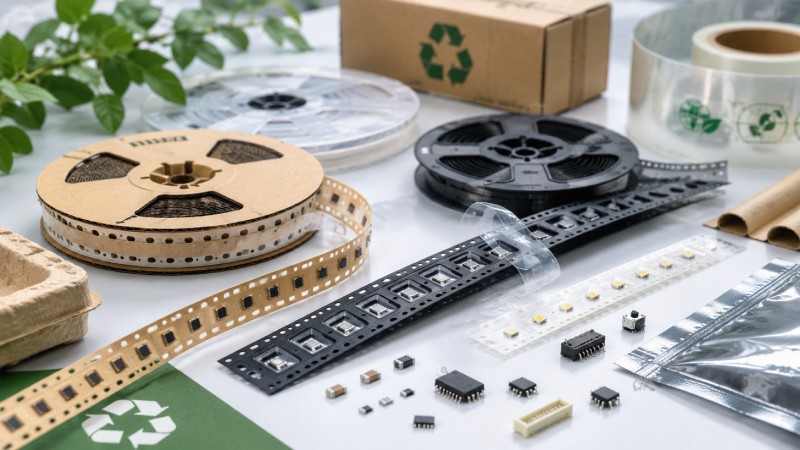
Sustainable tape and reel packaging refers to packaging solutions designed to reduce environmental impact while still meeting the functional requirements of electronic component handling, storage, shipping, and automated assembly. In practice, this may include recyclable carrier tape materials, paper-based packaging options, optimized tape dimensions, reduced production waste, recyclable reels, and more efficient packing methods.
But sustainability in electronic packaging must always be practical. A component that is packed in a lower-plastic material but becomes damaged during transportation does not create a truly sustainable result. The same applies if the tape causes unstable feeding, poor cover tape peeling, or rejected parts during SMT production.
A sustainable packaging solution should reduce unnecessary material use while keeping the component safe, stable, and ready for automated assembly. This is especially important for ICs, LEDs, sensors, connectors, terminals, relays, and other components that require accurate orientation and consistent feeding.
Why Standard Tape and Reel Packaging Can Create Waste
Packaging waste is not limited to the material that is thrown away after use. It can also come from poor packaging design, wrong material selection, rejected carrier tape, damaged components, retaping work, and production interruptions.
For example, using an oversized tape width for a small component may increase material use and reduce reel efficiency. A pocket that is too loose may allow the component to rotate, flip, or move during winding and shipping. A pocket that is too tight may create pressure marks or make loading difficult. Poor cover tape matching can lead to weak sealing, unstable peeling, or component movement during feeding.
In many cases, a small improvement in tape design can reduce more waste than simply changing the material. A well-designed tape and reel package helps reduce damaged parts, rejected reels, unnecessary rework, and customer complaints. This is why sustainable packaging should be considered as a complete system, not as a single material choice.
Sustainable Material Options for Carrier Tape
Carrier tape material is one of the first things buyers consider when discussing sustainable tape and reel packaging. The two most common directions are paper carrier tape and recyclable or optimized plastic carrier tape.
Paper carrier tape can be a practical option for many small, flat, and relatively simple electronic components. It is commonly used for passive components such as resistors, capacitors, and other small parts with stable shapes. For suitable components, paper tape can help reduce plastic use and support a cleaner packaging strategy.
However, paper tape is not suitable for every component. Tall components, irregular shapes, fragile surfaces, sharp terminals, or parts requiring deeper pocket protection may need stronger pocket structure and better dimensional flexibility.
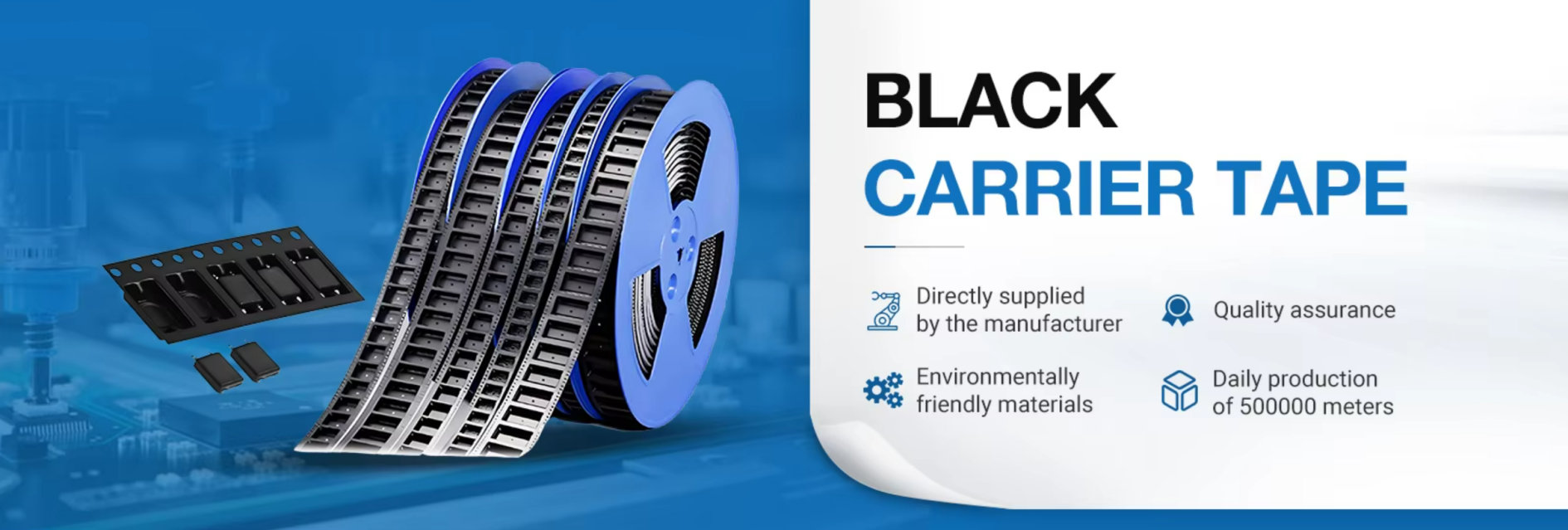
In these cases, embossed carrier tape may be more suitable. Embossed plastic carrier tape can provide custom pocket depth, better shape control, and more stable component positioning. For ICs, connectors, sensors, LEDs, relays, and precision metal stamped parts, plastic carrier tape often provides the protection needed for real SMT production.
Sustainability does not always mean avoiding plastic completely. In many applications, the more practical approach is to use recyclable or optimized plastic materials, reduce unnecessary tape width, improve pocket design, and minimize packaging rejects.
Sustainability Should Not Compromise Component Protection
The main function of tape and reel packaging is still protection. Components must remain safe during loading, reel winding, transportation, storage, and final pick-and-place assembly. If sustainable packaging fails in these areas, it can create more cost and more waste.
A reliable tape and reel package should prevent component movement inside the pocket, reduce the risk of lead deformation, protect sensitive surfaces, support ESD control where required, and maintain stable orientation. For some components, it also needs to work together with moisture barrier packaging or other protective materials.
This is especially important for ESD-sensitive components. A buyer should not choose a material only because it is recyclable or paper-based if the component requires conductive or anti-static protection. ESD safety, cover tape sealing, and feeding performance must all be reviewed together.
A sustainable packaging solution should reduce waste at the material level while also preventing waste at the production level. Damaged components, unstable feeding, and rejected reels are not sustainable outcomes.
Key Design Factors in Sustainable Tape and Reel Packaging
To build a more sustainable packaging solution, buyers should look beyond the material and review several design factors.
The first factor is pocket fit. The carrier tape pocket must hold the component securely without applying excessive pressure. If the pocket is too large, the component may move, rotate, or flip. If it is too tight, the component may be difficult to load or may be damaged during packaging.
The second factor is tape width and pitch. Oversized tape increases material use and may reduce the number of components per reel. Optimizing tape width and pitch helps reduce waste while keeping stable feeding performance. This is a practical way to improve sustainability without changing the component itself.
Pocket depth is also important. For taller or fragile components, the pocket must provide enough clearance while preventing excessive movement. This is where custom carrier tape becomes valuable, especially for irregular components, connectors, terminals, sensors, and stamped parts.
Cover tape compatibility is another key point. The cover tape must seal properly with the carrier tape material and peel smoothly during SMT feeding. Poor sealing can cause parts to move during shipping, while unstable peeling can interrupt production.
Finally, reel and carton efficiency should not be ignored. Reel size, quantity per reel, packing direction, and carton layout all affect transportation efficiency and total packaging material use.
Paper vs Plastic Carrier Tape: Which Is More Sustainable?
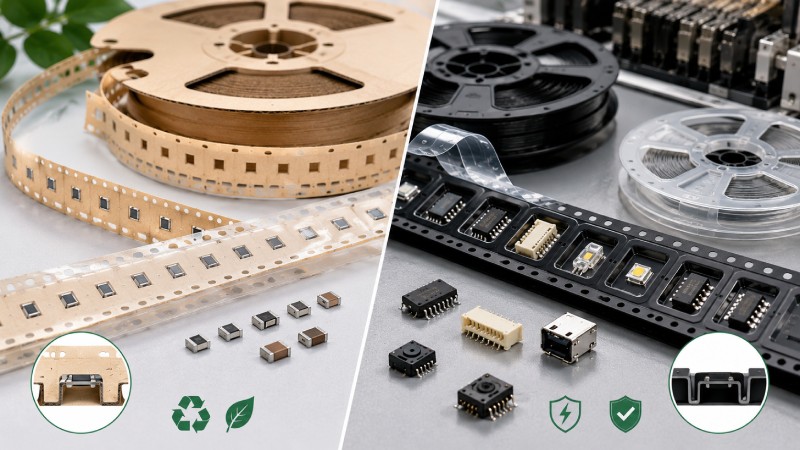
Many buyers ask whether paper carrier tape is more sustainable than plastic carrier tape. The answer depends on the component and the application.
Paper carrier tape has a clear advantage when the component is small, simple, flat, and suitable for paper-based pockets. It can help reduce plastic consumption and may be easier to position as an eco-friendly packaging option.
Plastic carrier tape, especially embossed carrier tape, is often better for complex components. If a part has an irregular shape, taller body, fragile structure, sensitive leads, or strict ESD requirements, plastic tape may provide better protection and feeding stability. In this case, using the right plastic tape can actually reduce waste by preventing rejected parts and packaging failures.
The best sustainable option is not always the material with the lowest plastic content. It is the option that uses materials efficiently, protects the component correctly, supports automated production, and reduces the chance of rework or scrap.
For simple passive components, paper carrier tape may be the right choice. For ICs, connectors, sensors, LEDs, relays, and non-standard parts, optimized embossed carrier tape may provide a better balance between sustainability and performance.
How Sustainable Tape and Reel Packaging Supports Buyer Requirements
Many electronics buyers now evaluate suppliers not only by price, lead time, and production capacity, but also by packaging responsibility. Packaging waste, recyclability, material consistency, and documentation may all influence supplier approval.
For component manufacturers, sustainable tape and reel packaging can support customer sustainability goals and make supplier communication easier. It can help show that the company is reducing unnecessary material use, improving packaging design, and considering downstream waste handling.
This is especially useful for suppliers serving automotive electronics, consumer electronics, industrial control, medical-related electronics, and export markets. Buyers in these fields often care about packaging consistency, component safety, and long-term supply reliability.
A practical sustainable packaging plan can also improve brand trust. When a supplier can explain why a specific material, tape width, pocket design, and reel format were selected, the buyer is more likely to see the packaging as professional and reliable.
Common Mistakes When Choosing Sustainable Tape and Reel Packaging
One common mistake is choosing packaging based only on eco-friendly claims. A material may sound sustainable, but it still needs to match the component’s size, shape, sensitivity, and production process.
Another mistake is ignoring ESD requirements. For sensitive components, conductive or anti-static packaging may be necessary. Recyclability should not replace basic component protection.
Some buyers also try to reduce tape width too aggressively. While this may save material, it can create unstable pockets, poor feeding, or insufficient protection. Sustainable packaging should be optimized, not weakened.
Cover tape is another area that is often overlooked. Even if the carrier tape is well designed, poor cover tape matching can cause sealing problems, unstable peel force, or component movement.
Buyers should also consider shipping conditions. Vibration, reel winding tension, carton stacking, and transportation distance can all affect packaging performance. A sustainable package must still survive the real logistics process.
What Information Should Buyers Provide Before Requesting a Quote?
To receive a suitable sustainable tape and reel packaging recommendation, buyers should prepare basic component and packaging information. This may include a component drawing, 3D file, sample, length, width, height, tolerance range, weight, and lead or terminal structure.
Buyers should also share whether the component has fragile surfaces, special coating, ESD sensitivity, moisture sensitivity, or orientation requirements. If there are existing packaging problems, such as loose fit, component flipping, poor peeling, or reel damage, these details are very useful.
Other helpful information includes target tape width, pitch, reel size, quantity per reel, destination market, and customer packaging requirements. If the buyer is not sure about these details, Jiushuo can review the component and recommend a practical packaging direction.
For new projects, buyers can request a custom tape and reel packaging quote by sending drawings, samples, or basic component specifications.
How Jiushuo Helps Build More Sustainable Tape and Reel Packaging Solutions
Jiushuo helps electronic component suppliers develop tape and reel packaging solutions that balance sustainability, protection, and SMT feeding reliability. Instead of recommending one material for every component, Jiushuo evaluates the component shape, ESD requirements, pocket structure, cover tape matching, and buyer sustainability goals.
For suitable components, Jiushuo can support paper carrier tape evaluation. For complex or sensitive parts, Jiushuo can provide custom embossed carrier tape solutions with optimized pocket design, material selection, tape width, and reel format.
Jiushuo also helps buyers review cover tape compatibility, component stability, reel winding, and packaging efficiency. This practical approach helps reduce unnecessary waste while keeping the packaging reliable for real production conditions.
If you are looking for sustainable tape and reel packaging for electronic components, Jiushuo can help review your component and recommend a suitable carrier tape, cover tape, and reel combination.
FAQ About Sustainable Tape and Reel Packaging
Is sustainable tape and reel packaging suitable for SMT production?
Yes. Sustainable tape and reel packaging can be suitable for SMT production if it is designed around the component and the feeding process. It still needs stable pocket dimensions, proper cover tape sealing, and reliable reel winding.
Is paper carrier tape always the best sustainable option?
No. Paper carrier tape is useful for many small and simple components, but it is not suitable for every part. Complex, tall, fragile, irregular, or ESD-sensitive components may need embossed plastic carrier tape.
Can recyclable carrier tape protect ESD-sensitive components?
Yes, if the correct conductive or anti-static material is selected for the application. ESD protection should be reviewed before choosing the final packaging material.
Does sustainable tape and reel packaging increase cost?
It depends on the component, material, order quantity, and customization level. In some cases, better design can reduce waste, improve packing efficiency, and lower hidden costs caused by rework or rejected parts.
What is the first step to choosing a sustainable packaging option?
Start with the component. Provide drawings, samples, ESD requirements, and current packaging problems so the supplier can recommend a realistic and reliable solution.
Conclusion
Sustainable tape and reel packaging is not a single material choice. It is a complete packaging strategy that reduces unnecessary waste while maintaining component protection, ESD safety, sealing quality, and SMT feeding stability.
For simple components, paper carrier tape may be a practical way to reduce plastic use. For complex or sensitive components, optimized embossed carrier tape may provide better protection and fewer production risks.
The most effective solution is the one that fits the component, supports the buyer’s sustainability goals, and performs reliably in real assembly conditions. Jiushuo helps electronic component suppliers evaluate sustainable tape and reel packaging options based on component shape, material requirements, ESD needs, and SMT feeding performance.



 Emial
Emial John Mr