
Carrier Tape Manufacturing Process | How Carrier Tape Is Made
Why Carrier Tape Manufacturing Process Matters
The carrier tape manufacturing process plays a critical role in SMT production stability, yet it is often underestimated as “just a plastic packaging step.” In reality, carrier tape is a precision-engineered interface between electronic components and automated pick-and-place systems. Every stage of production—from material behavior to forming consistency—directly affects component positioning, feeding accuracy, and placement reliability.
Two carrier tapes may share the same nominal dimensions, but differences in manufacturing methods can lead to completely different outcomes on the production line. Variations in pocket geometry, pitch stability, or alignment accuracy can cause misfeeds, component tilt, or placement errors that reduce overall yield. These issues rarely originate at the SMT line itself; they are often rooted in upstream manufacturing inconsistencies.
Understanding how carrier tape is made helps engineers evaluate not only whether a tape “fits” a component, but whether it performs reliably under real production conditions.
Overview of Carrier Tape Manufacturing Process
The carrier tape manufacturing process follows a structured sequence designed to ensure dimensional consistency and feeding reliability, rather than focusing on speed or volume. At a high level, the process begins with material preparation, where raw materials are conditioned to achieve stable behavior during forming. This is followed by pocket forming, in which component cavities are created to hold parts securely and consistently throughout transportation and assembly.
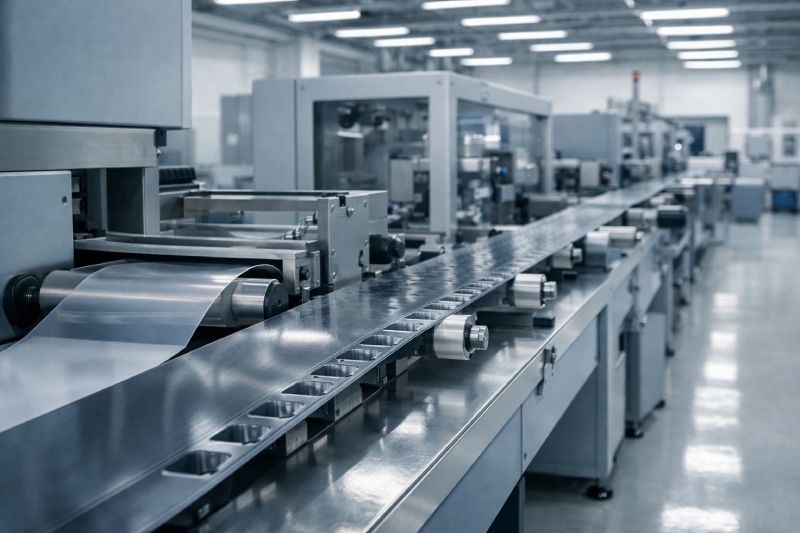
Next, sprocket hole punching and alignment establish the indexing reference required for automated feeders, ensuring the tape advances accurately during pick-and-place operations. Finally, the tape undergoes inspection and winding, where manufacturing stability is verified and the tape is prepared for integration into tape-and-reel systems.
This overview is intended for readers who are new to carrier tape production. Rather than detailing machines or parameters, it outlines the logical flow of manufacturing stages and how each contributes to overall SMT performance. Subsequent sections examine these stages from an engineering perspective, explaining why process control matters more than nominal specifications alone.
Material Preparation for Carrier Tape Manufacturing
Material preparation is the foundation of the carrier tape manufacturing process, as material behavior directly determines forming stability and dimensional repeatability. Common carrier tape materials include PC, PS, PET, and paper-based substrates, each selected based on component weight, geometry, ESD requirements, and end-use conditions. While these materials may appear similar at the specification level, their forming response and long-term stability can vary significantly.
Before forming begins, materials must exhibit consistent thickness, stiffness, and surface characteristics. Any variation at this stage is amplified during pocket forming, leading to uneven cavity depth, deformation, or pitch inconsistency. For example, a material that reacts unpredictably to forming stress may produce pockets that look acceptable visually but behave inconsistently during feeding.
From an engineering perspective, material consistency is not about achieving the tightest nominal value, but about ensuring predictable behavior throughout the entire production run. This is why experienced manufacturers treat material preparation as a controlled process rather than a simple sourcing step.
Pocket Forming Process (Embossed & Punched)
Pocket forming is the most critical stage in the carrier tape manufacturing process, as it defines how securely and consistently components are held during transport and automated placement. At this stage, manufacturing capability has a far greater impact on performance than nominal dimensions listed on a drawing.
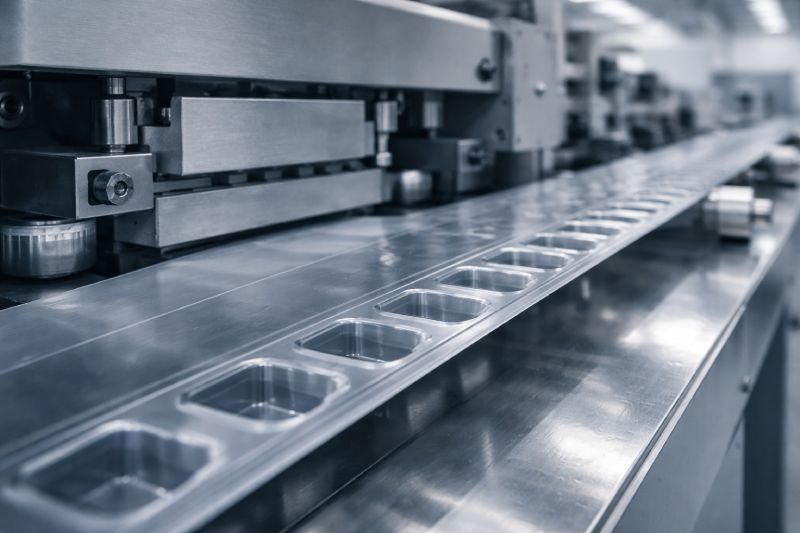
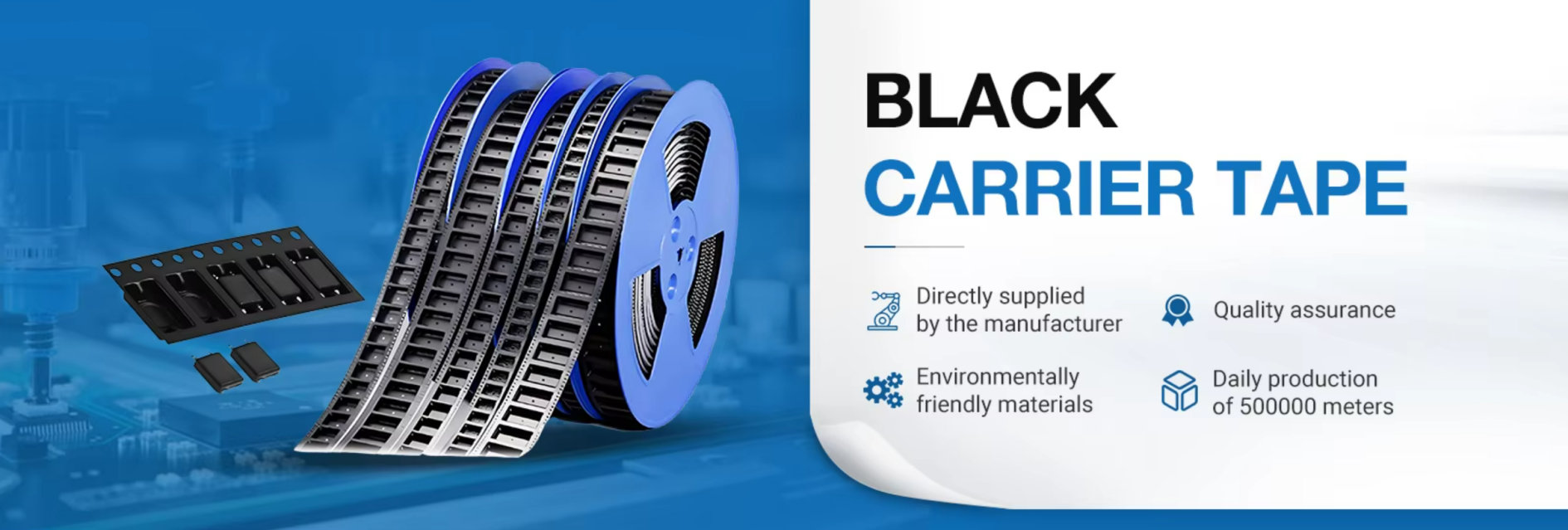
For embossed carrier tape, pockets are formed by shaping the material into precise cavities. The goal is not only to achieve the correct pocket size, but to maintain uniform geometry across the entire tape length. Consistent pocket depth, sidewall behavior, and cavity shape ensure that components sit flat, remain stable under vibration, and release predictably during pick-and-place operations. Any variation in forming behavior can lead to component tilt or unstable positioning, even if the pocket appears dimensionally correct.
In contrast, punched or flat carrier tape relies on controlled cutting or removal processes to create openings or component positions. Although the forming approach differs, the engineering objective remains the same: repeatable pocket geometry and stable material behavior throughout production.
Key control points during pocket forming include pocket consistency, shape repeatability, and material response under forming stress. These factors determine whether a carrier tape performs reliably on high-speed SMT lines or becomes a source of feeding instability.
Sprocket Hole Punching and Tape Alignment
Sprocket hole punching and tape alignment define how a carrier tape interacts with SMT feeders, making this stage essential for stable and repeatable feeding. Sprocket holes serve as the indexing reference that drives tape advancement; their function is not merely structural, but positional. Even minor inconsistencies can disrupt feeding rhythm and affect placement accuracy.
From an engineering standpoint, the relative position between sprocket holes and pockets is more critical than hole size alone. A tape with correctly sized holes but inconsistent pocket-to-hole alignment may advance smoothly yet present components off-center at the pickup point. This misalignment increases the risk of mispicks, nozzle contact, or placement drift—issues that are often misattributed to the feeder or machine setup.
Accurate alignment ensures that each pocket arrives at the pick position in a predictable, repeatable manner, regardless of production speed. This is why experienced manufacturers treat sprocket hole punching as an integrated alignment process rather than a standalone operation.
Quality Inspection in Carrier Tape Manufacturing
Quality inspection and process control ensure that carrier tape performance remains stable not only at the beginning of production, but throughout the entire manufacturing run. From an engineering perspective, inspection is not limited to identifying defects; it is a feedback mechanism that confirms whether the manufacturing process itself is behaving consistently.
Visual inspection focuses on pocket appearance, edge definition, and surface condition, helping detect forming irregularities or material stress before they affect downstream use. Dimensional consistency checks verify that pocket geometry, pitch progression, and alignment relationships remain uniform across the tape length, rather than drifting over time. These checks are designed to validate repeatability, not just compliance with a single measurement point.
Equally important is process stability monitoring, which evaluates whether forming and alignment behavior remains predictable under continuous production. Instead of relying on isolated inspections, experienced manufacturers emphasize trend observation and deviation awareness. This control logic allows potential feeding or placement risks to be identified early, long before issues appear on the SMT line.
Tape and Reel Integration Process
After inspection, carrier tape enters the tape and reel integration process, where it is prepared for use in automated SMT environments. At this stage, the focus shifts from individual tape features to how the tape behaves as part of a complete feeding system. Proper integration ensures that the tape maintains its geometry and alignment from the reel to the pick position.
Carrier tape must work in coordination with cover tape, providing secure component retention during transport while allowing controlled release during pick-and-place. Inconsistent winding tension or poor reel alignment can introduce stresses that affect pocket shape or pitch stability, even if the tape itself was well manufactured.
Winding consistency is particularly important for end users, as it directly influences feeder loading, startup stability, and continuous operation. A well-integrated tape and reel system reduces line stoppages, minimizes setup adjustments, and supports predictable production flow.
Custom Carrier Tape Manufacturing Considerations
Custom carrier tape manufacturing places far greater demands on process control and engineering experience than standard production. Unlike off-the-shelf formats, custom projects often involve non-standard component shapes, unique pocket geometries, or specific handling requirements that cannot be validated through specifications alone.
One key challenge is that small design changes can have a disproportionate impact on manufacturing behavior. Pocket depth, wall angle, or material selection that works in a prototype may behave differently when scaled to production. This effect is especially noticeable when comparing small-batch trials versus full-scale manufacturing, where process stability and repeatability become the deciding factors for success.
Experienced manufacturers approach custom projects by aligning design intent with realistic manufacturing capability. This ensures that pocket geometry, alignment logic, and material behavior remain consistent over time, not just in initial samples. In this context, manufacturing expertise becomes an extension of the design process itself.
Common Challenges in Carrier Tape Manufacturing
Even with standardized designs, carrier tape manufacturing presents a range of engineering challenges that can affect SMT performance if not properly controlled. One common issue is pocket deformation, where cavities lose their intended shape due to inconsistent forming behavior or material response. These deformations may be subtle but can lead to component instability during feeding.
Another frequent challenge is inconsistent pitch, which disrupts the precise indexing required by automated pick-and-place systems. Pitch variation often originates from upstream process fluctuations rather than dimensional design errors, making it difficult to identify without a manufacturing-level perspective.
Feeding instability can also occur when the interaction between pockets, sprocket holes, and material stiffness is not well balanced. Additionally, material variation between production batches can introduce unexpected changes in forming behavior, even when the design remains unchanged.
These challenges highlight why carrier tape performance cannot be evaluated solely by drawings or sample appearance; they are fundamentally linked to manufacturing discipline and process consistency.
Summary
The carrier tape manufacturing process is not a sequence of isolated steps, but a tightly connected system where material behavior, forming consistency, alignment logic, and process control work together to ensure SMT stability. Reliable carrier tape performance comes from manufacturing discipline, not from drawings or nominal specifications alone. When manufacturing capability is aligned with design intent, feeding accuracy improves, placement risk decreases, and overall production yield becomes more predictable.
If your application requires stable, production-ready solutions rather than theoretical compliance, the next step is to work with a manufacturer that understands the full process.



 Emial
Emial John Mr