
Punched Carrier Tape for SMT Packaging | Structure, Uses & Comparison
What Is Punched Carrier Tape?
Punched carrier tape is a flat-based SMT packaging format where component pockets are created by mechanically punching openings into a continuous sheet material. Unlike embossed carrier tape—which forms three-dimensional pockets through thermoforming—punched carrier tape maintains a relatively shallow, uniform profile.
This structure makes it suitable for small, flat, low-profile electronic components where deep pocket support is not critical. Punched carrier tape is commonly used in low-to-medium volume SMT applications, prototyping runs, or cost-sensitive packaging scenarios where component geometry is simple and stable.
For a complete overview of all carrier tape types and use cases, see the Carrier Tape Guide.
How Is Punched Carrier Tape Manufactured?
Punched carrier tape is produced through a flat sheet punching process rather than a thermoforming operation. The manufacturing starts with a continuous roll of flat material—typically plastic or paper—that is precisely fed through a punching system. Mechanical punches create uniformly spaced pockets by cutting or perforating the sheet according to predefined dimensions.
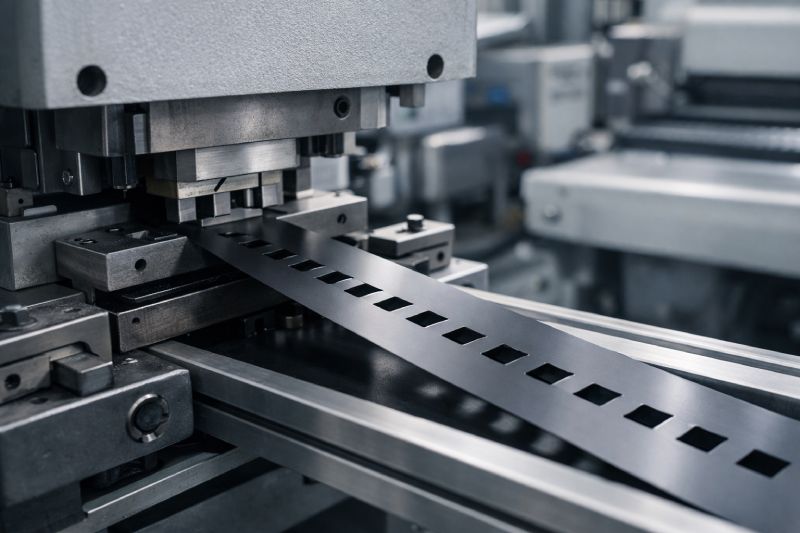
Pocket depth is determined by the material thickness and punch geometry, resulting in shallow, consistent cavities rather than formed pockets. Throughout the process, strict control is maintained over pitch accuracy, sprocket hole alignment, and pocket positioning to ensure compatibility with standard SMT feeders.
Because this method avoids heating and forming stages, punched carrier tape manufacturing is generally simpler and faster to set up, making it well suited for standardized designs and smaller production volumes.
Punched vs Embossed Carrier Tape: Key Differences
Punched carrier tape and embossed carrier tape serve different SMT packaging needs, primarily due to how their pockets are formed and how components are supported during transport and feeding.
Pocket depth and shape are the most obvious differences. Punched carrier tape features shallow, flat-bottom pockets created by cutting or punching, while embossed carrier tape uses thermoformed, three-dimensional cavities that can be precisely shaped around the component. As a result, component stability in punched tape relies more on flatness and cover tape tension, whereas embossed tape provides stronger mechanical retention.
In terms of component suitability, punched carrier tape is best for small, low-profile, and geometrically simple parts. Embossed carrier tape is preferred for taller, irregular, or fragile components that benefit from secure positioning.
From a production perspective, punched carrier tape is often used for low-to-medium volume programs and standardized layouts, while embossed carrier tape scales better for high-volume, automated SMT lines.
For applications requiring deeper pockets or higher placement reliability, see Embossed Carrier Tape for SMT & Electronic Components.
Applications of Punched Carrier Tape
Punched carrier tape is typically applied in SMT packaging scenarios where component geometry is simple and pocket depth requirements are minimal. Its flat, punched structure works best for parts that naturally sit stable without the need for deep mechanical retention.
Common applications include small, flat electronic components such as chip resistors, capacitors, LEDs, and other low-profile SMDs. These components benefit from the consistent pitch and feeder compatibility of punched carrier tape while avoiding the added complexity of formed pockets.
Punched carrier tape is also frequently used in low-to-medium volume SMT lines, pilot production runs, and prototyping environments. In these cases, flexibility, faster setup, and cost control often take priority over maximum automation speed. Rather than targeting complex or high-risk components, punched carrier tape is selected for predictable, repeatable feeding of standardized parts where performance requirements are well understood.
Materials for Punched Carrier Tape
Punched carrier tape can be manufactured from several flat sheet materials, selected based on component requirements, handling conditions, and cost considerations. Because the pockets are created by punching rather than forming, material properties such as stiffness, thickness uniformity, and dimensional stability are especially important.
PS (Polystyrene) is one of the most commonly used materials. It offers good rigidity, clean punch edges, and cost efficiency, making it suitable for standard SMT applications with low-profile components.
PET (Polyethylene Terephthalate) provides higher mechanical strength and better dimensional stability. It is often chosen when improved durability, tighter tolerances, or better resistance to deformation is required.
In some applications, paper-based carrier tape may also be used for simple, lightweight components, particularly where environmental considerations or short-term handling are priorities.
Advantages and Limitations of Punched Carrier Tape
Like any SMT packaging format, punched carrier tape offers clear strengths—but it is not suitable for every application. Understanding both sides is critical for correct material selection.
Advantages
One key advantage of punched carrier tape is its simple and cost-effective structure. The flat punching process avoids thermoforming, resulting in lower tooling complexity and faster setup for standardized designs. It also provides good dimensional consistency, which supports reliable feeding for flat, lightweight components. For low-to-medium volume programs, punched carrier tape can be an efficient and economical choice.
Limitations
Punched carrier tape is not suitable for components requiring deep or contoured pockets. Because pocket depth is limited by material thickness, taller, irregularly shaped, or fragile components may lack sufficient stability during transport or high-speed feeding. It is also less tolerant of vibration and acceleration, making it a weaker option for high-speed, high-volume SMT lines. In such cases, embossed carrier tape is typically the safer and more stable solution.
Is Punched Carrier Tape Suitable for Your SMT Application?
Determining whether punched carrier tape is the right choice depends on several application-specific factors rather than cost alone. The first consideration is component geometry. Flat, low-profile parts with simple outlines are generally well suited, while tall or irregular components benefit from formed pockets.
Next, evaluate the required pocket depth and retention. If the component must remain firmly constrained during transport or high-speed placement, punched carrier tape may not provide sufficient support. Automation speed is another key factor—punched carrier tape performs reliably in moderate-speed SMT lines but can become less stable as feeder acceleration increases.
Finally, consider production scale. For prototyping, pilot runs, or low-to-medium volume production, punched carrier tape offers flexibility and efficiency. For complex or high-volume programs, custom-embossed solutions are often more appropriate.
Punched Carrier Tape in Tape and Reel Systems
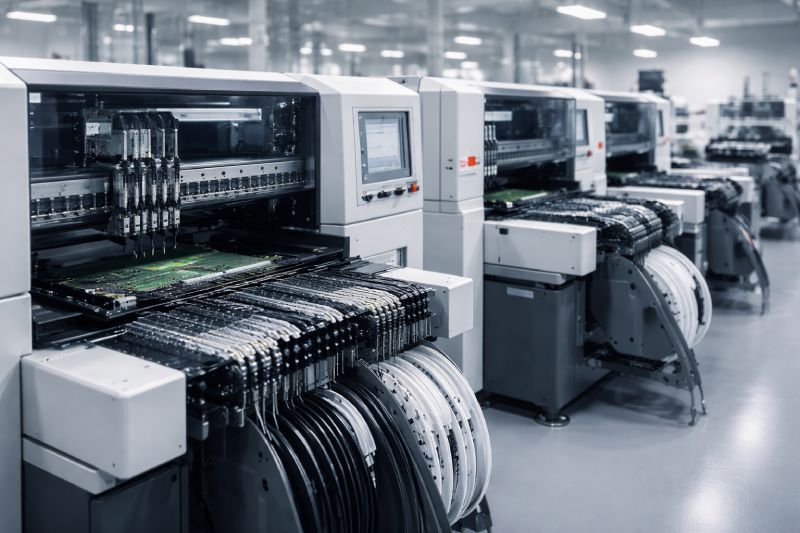
Punched carrier tape is fully compatible with standard tape and reel packaging systems and is widely used in automated SMT feeding environments. Although its pocket structure is flat and punched rather than formed, the tape still follows industry-standard dimensions for pitch, width, sprocket holes, and cover tape sealing.
In a tape and reel setup, components are retained by the combination of the punched pocket and the cover tape, then wound onto reels for transport and automated placement. When properly specified, punched carrier tape feeds smoothly through conventional SMT feeders, just like embossed tape.
It is important to note that using punched carrier tape does not limit integration with reel-based handling or automation—it simply reflects a different pocket construction method optimized for suitable component types.
Summary
Punched carrier tape is a distinct SMT packaging type designed for flat, low-profile components where shallow pockets and cost-efficient production are sufficient. Its punched, flat-based structure makes it well suited for standardized parts, prototyping, and low-to-medium volume SMT applications.
When components benefit from greater pocket depth, complex geometry control, or higher feeding stability, embossed carrier tape becomes the more appropriate choice. Selecting the right format is less about superiority and more about matching the packaging structure to the component and production conditions.
If your application is approaching the limits of punched carrier tape, the next step is to evaluate alternative formats or customized solutions.



 Emial
Emial John Mr