
What Is Carrier Tape in Electronics Manufacturing? Definition & Applications
What Is Carrier Tape?
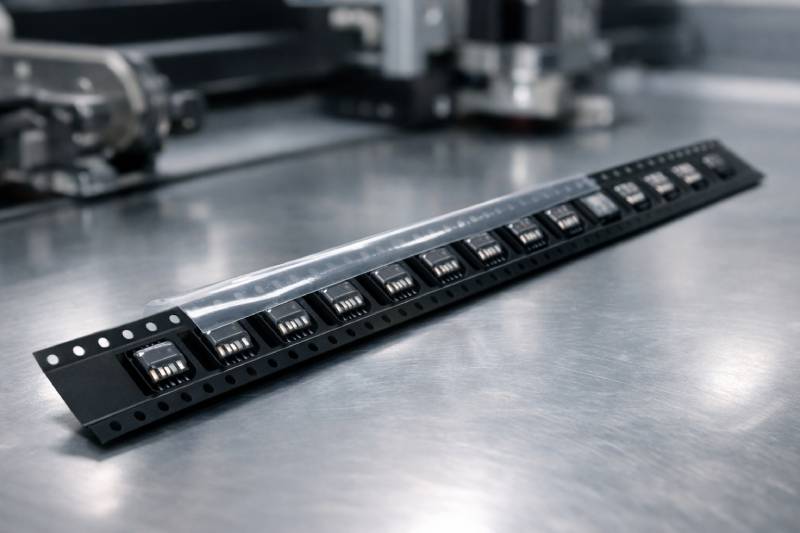
Carrier tape is a specialized packaging material designed to securely hold, protect, and position electronic components in a continuous format for automated handling during manufacturing and assembly processes.
It is widely used to package small, sensitive components so they can be transported, stored, and fed smoothly into high-speed production lines without manual intervention.
In surface mount technology (SMT) and semiconductor manufacturing, carrier tape works with automated pick-and-place equipment to ensure precise component alignment, consistent feeding, and reliable assembly performance.
Why Is Carrier Tape Used?
Carrier tape is used because modern electronics manufacturing relies heavily on automation, precision, and repeatability—all of which are difficult to achieve with loose or bulk packaging. Small electronic components are often fragile, lightweight, and dimensionally sensitive. When supplied in bulk or simple trays, they are prone to misalignment, damage, and feeding errors during assembly.
Automated SMT production lines depend on components to be presented in a consistent orientation and spacing so pick-and-place machines can operate at high speed with minimal error rates. Carrier tape solves this by holding each component in an individual pocket, maintaining fixed pitch and position throughout transport and assembly.
As a result, carrier tape improves placement accuracy, reduces downtime caused by misfeeds, and supports scalable, high-efficiency electronics manufacturing. For a deeper technical overview, see the full Carrier Tape Guide.
Carrier Tape in SMT & Semiconductor Applications
In SMT assembly, pick-and-place machines rely on a continuous, predictable feeding system to place components accurately onto printed circuit boards. Carrier tape enables this process by presenting each component at a fixed pitch and orientation, allowing the machine’s vision system and vacuum nozzle to pick parts reliably at high speed.
In semiconductor and IC packaging, the requirements are even more stringent. Components are often smaller, more delicate, and more sensitive to electrostatic discharge and positional deviation. Carrier tape provides controlled pocket geometry and stable transport, reducing the risk of damage or misalignment during handling.
Because it supports automation, precision, and consistency across both SMT and semiconductor workflows, carrier tape has become the dominant packaging method in these industries.
How Does a Carrier Tape System Work?
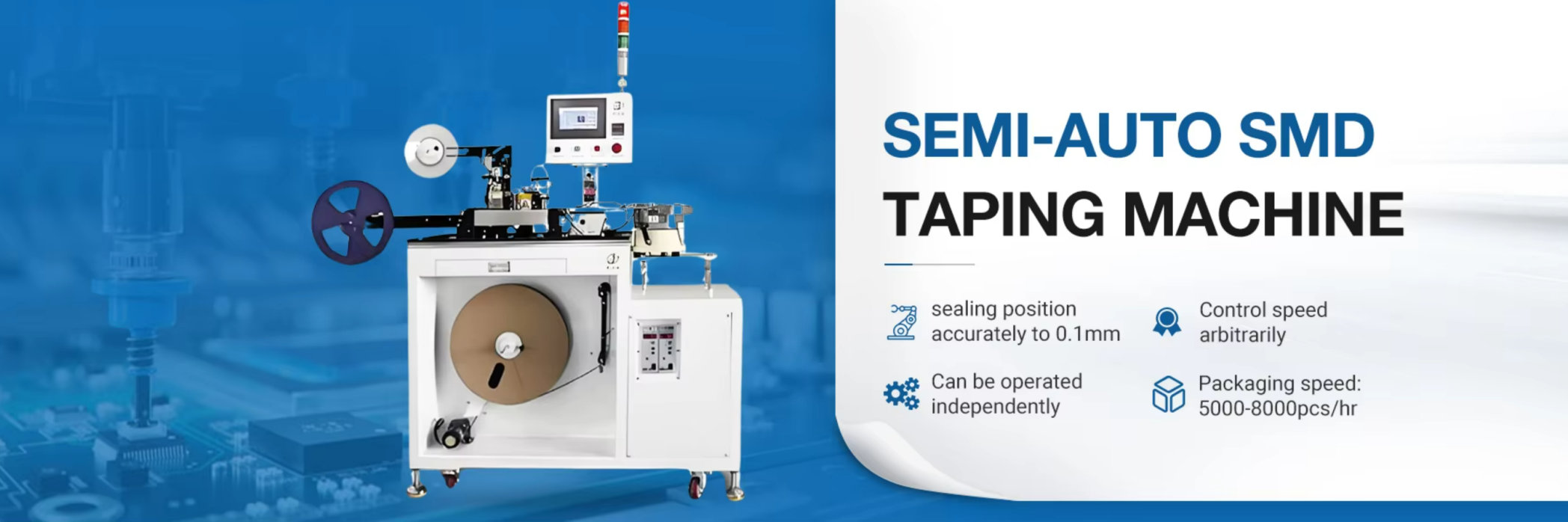
A carrier tape system is commonly known as a tape-and-reel packaging solution, designed to feed components smoothly into automated assembly equipment. It consists of three core elements working together to protect and present electronic parts in a controlled, continuous format.
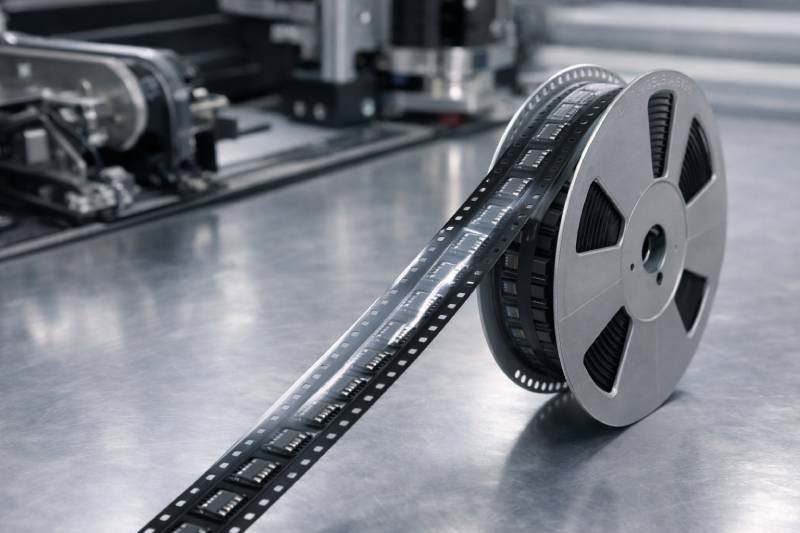
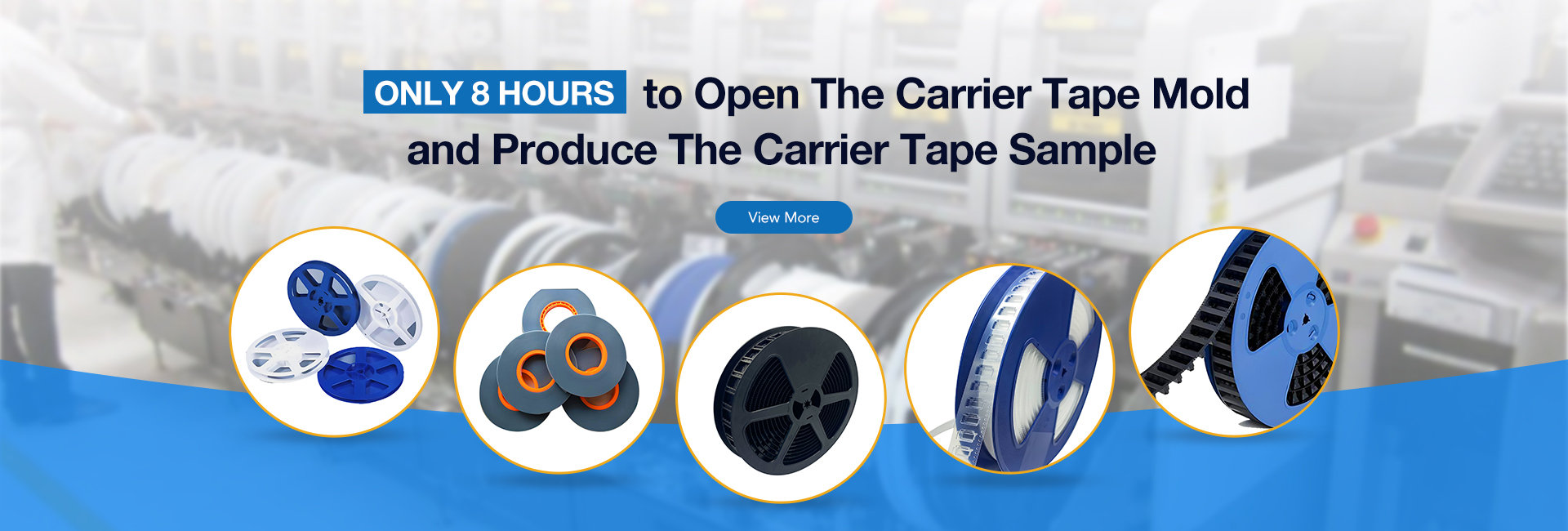
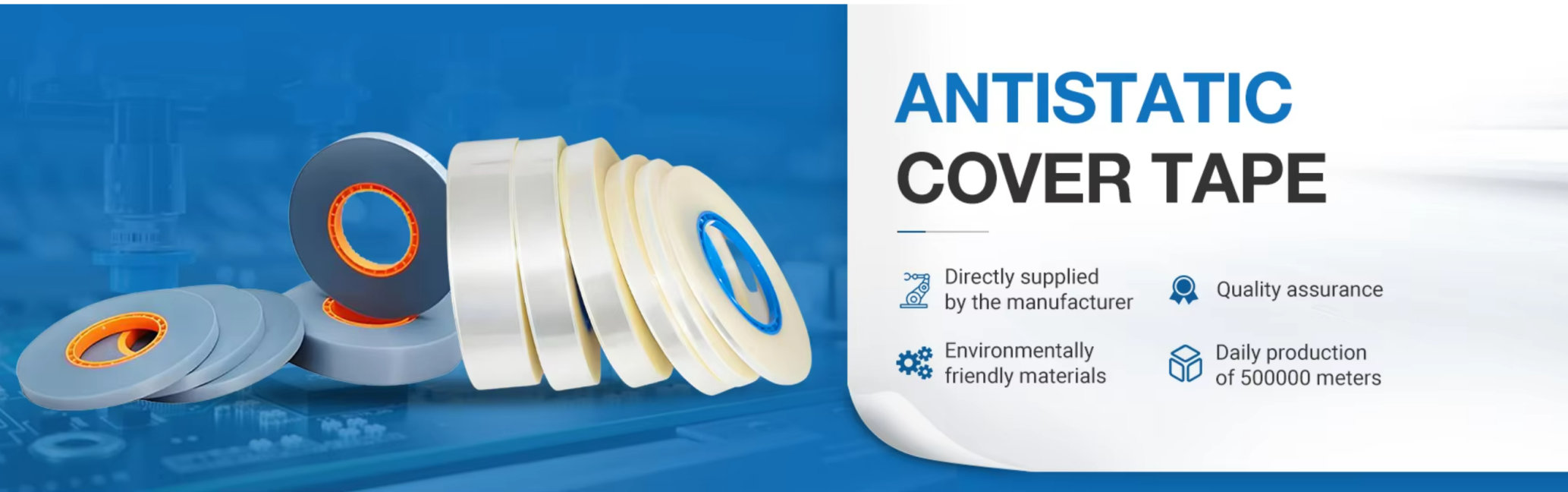
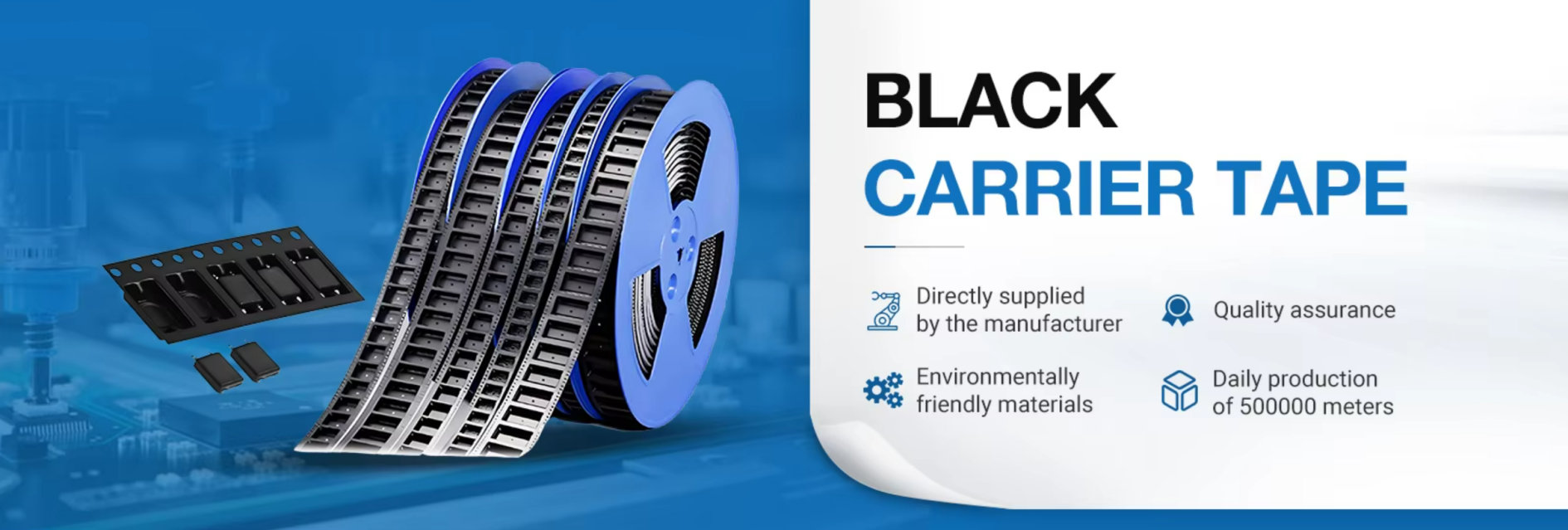
The carrier tape itself contains evenly spaced pockets that hold individual components in a fixed orientation. These pockets prevent movement and ensure consistent positioning during transport and feeding. A cover tape is then sealed over the carrier tape to secure the components in place while still allowing clean, controlled peeling during assembly.
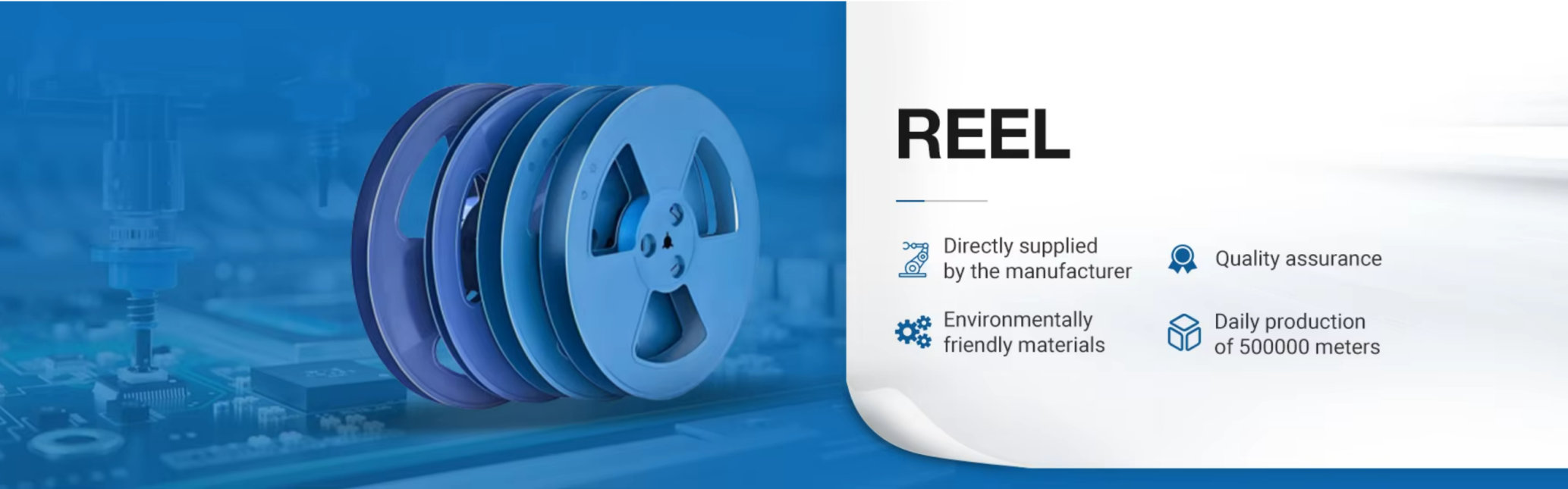
Finally, the loaded and sealed tape is wound onto a reel, making it compatible with automated feeders used in SMT production lines. This combined system ensures stable handling, accurate feeding, and efficient high-volume assembly.
Main Types of Carrier Tape
Carrier tape comes in several basic types, each designed to suit different component shapes, handling requirements, and manufacturing processes. This section provides a high-level overview without going into technical specifications or material comparisons.
Embossed Carrier Tape
Embossed carrier tape is the most commonly used type in SMT and semiconductor packaging. Its pockets are thermoformed to match the shape of individual components, holding them securely in a fixed orientation. This design supports reliable automated feeding and is widely used for ICs, LEDs, connectors, and other precision components.
Learn more at Embossed Carrier Tape → /embossed-carrier-tape/.
Punched / Flat Carrier Tape
Punched, or flat, carrier tape features cavities created by punching through a flat strip rather than forming deep pockets. It is typically used for simpler or flatter components where full pocket depth is not required. This type is often paired with specific component geometries and controlled feeding environments.
Paper Carrier Tape
Paper carrier tape is commonly used for standard SMT components supplied in large volumes. It provides stable positioning for automated placement while offering a more traditional tape format familiar in many assembly lines. Paper carrier tape is frequently used where component protection requirements are moderate.
Other Specialized Types
In highly specialized applications such as advanced IC or wafer-related packaging, custom carrier tape formats may be used. These are designed to meet unique handling, alignment, or process requirements in semiconductor manufacturing environments.
What Is Carrier Tape Used For?
Carrier tape is used across a wide range of electronics manufacturing applications where automated handling, precise positioning, and component protection are required. It is especially common in industries that depend on high-speed SMT assembly and consistent quality control.
In IC and semiconductor production, carrier tape is used to package sensitive chips and devices so they can be safely transported and accurately fed into automated equipment. For LED manufacturing, carrier tape supports reliable placement of small, fragile light-emitting components during board assembly.
Automotive electronics also rely heavily on carrier tape, particularly for connectors and control components that must meet strict consistency and reliability standards. Beyond these sectors, carrier tape is widely used for general SMT components such as resistors, capacitors, and sensors, making it a foundational packaging solution throughout the electronics supply chain.
Relevant solutions include IC Carrier Tape, LED Carrier Tape, and Automotive Connector Carrier Tape, depending on the application.
Carrier Tape vs Tray vs Tube
Carrier tape, trays, and tubes are all common packaging methods for electronic components, but they serve different purposes in manufacturing workflows. Each format supports automation in a different way.
Trays are typically used for larger or more rigid components that need stable, compartmentalized protection during transport and storage. They are well suited for lower-speed handling or batch processing but are less efficient for continuous high-speed assembly.
Tubes are often used for small, uniform components that can slide through a linear channel. They work well for simple feeding systems but offer limited control over orientation and are less flexible for complex automation.
Carrier tape stands out by providing continuous, controlled feeding with consistent orientation, making it ideal for high-speed SMT production.
Can Carrier Tape Be Customized?
Yes, carrier tape can be customized to meet specific component and production requirements. Customization is often necessary when standard carrier tape formats cannot provide sufficient stability, alignment, or compatibility with automated assembly equipment.
Custom carrier tape typically solves issues related to component shape, orientation control, feeding reliability, or handling sensitivity. By tailoring the pocket design and overall tape configuration, manufacturers can reduce misfeeds, prevent component movement, and improve pick-and-place accuracy on SMT lines.
Companies that work with non-standard components, precision ICs, automotive electronics, or high-value semiconductor devices often depend on custom solutions to maintain production efficiency and quality.
Summary
Carrier tape is a specialized packaging solution used to securely hold and feed electronic components into automated assembly systems, particularly in SMT and semiconductor manufacturing. By organizing components in a continuous, controlled format, it enables precision, consistency, and high-efficiency production.
Choosing the right carrier tape is an important part of ensuring smooth automation, minimizing handling issues, and protecting sensitive components throughout the manufacturing process.
To take the next step, you can View Carrier Tape Products or explore the Full Carrier Tape Guide for more detailed selection and engineering insights.



 Emial
Emial John Mr