
Paper Carrier Tape MOQ and Lead Time: Buyer’s Guide
When sourcing paper carrier tape, buyers often ask two questions first: “What is the minimum order quantity?” and “How quickly can the order be delivered?” Although these questions appear simple, the answers depend on the component dimensions, tape structure, tooling requirements, material specifications, order volume, and approval process.
A repeat order based on an approved design may move into production quickly. A new custom project, however, may require component evaluation, drawing preparation, tooling, sample production, feeding tests, and customer approval before mass production begins.
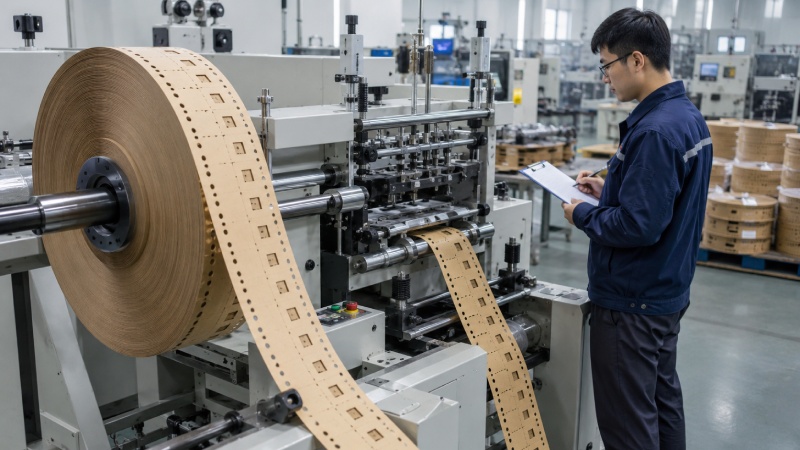
Understanding these factors helps purchasing teams compare quotations more accurately, avoid unrealistic delivery expectations, and plan their packaging schedules with fewer delays.
Quick Answer: What MOQ and Lead Time Should Buyers Expect?
There is no universal MOQ or production lead time for paper carrier tape.
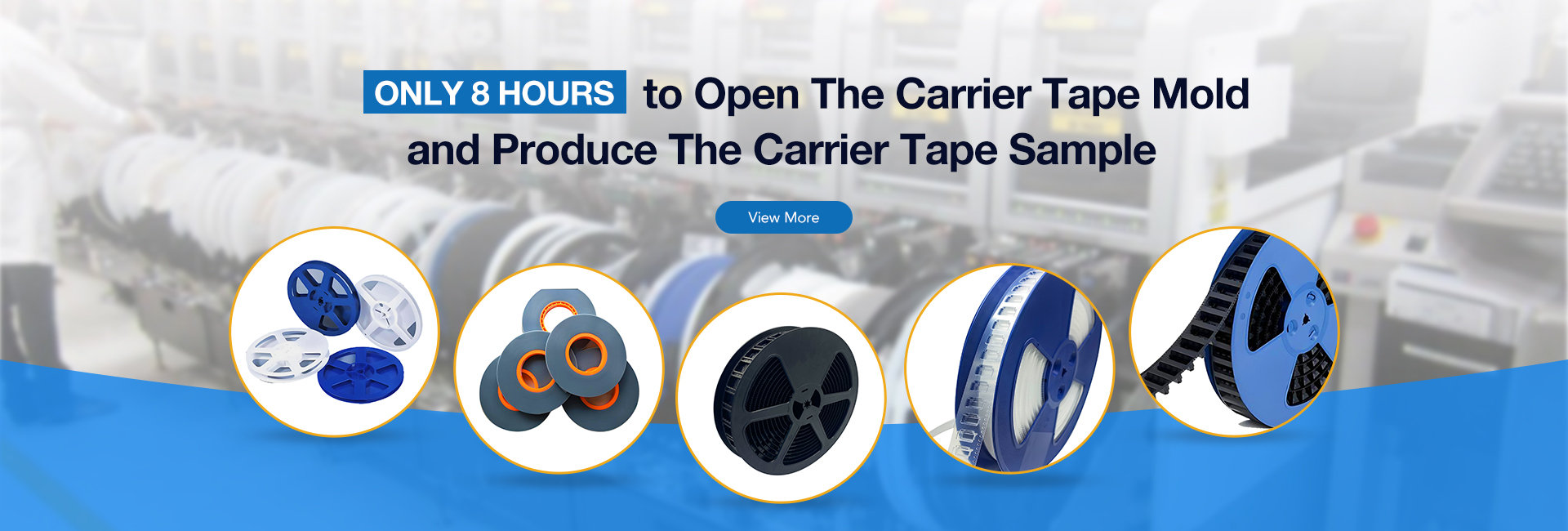
Orders using an existing tape design or compatible tooling generally require less setup and can be produced faster. Fully customized paper carrier tape usually involves more engineering work, especially when the component requires a new pocket shape, special paper thickness, bottom support layer, cover tape, or reel configuration.
For an accurate quotation, the supplier should review the component drawing, physical samples, required quantity, tape specifications, and target delivery date.
What Do MOQ and Lead Time Mean for Paper Carrier Tape?
MOQ, or minimum order quantity, is the smallest quantity a supplier can manufacture economically for a particular specification. It may be expressed in meters, reels, kilograms, packaged component quantities, or minimum order value.
Buyers should therefore avoid comparing MOQ figures without confirming the unit. An MOQ of several reels may represent a very different tape length from an MOQ stated in meters.
Lead time also needs to be defined clearly. Depending on the supplier, it may refer to:
-
Engineering and drawing preparation
-
Tooling development
-
Sample production
-
Customer validation
-
Mass production
-
Final inspection
-
Transportation to the buyer
A quotation that states only “production time” may not include drawing approval, sample testing, or international shipping. Buyers should ask for a stage-by-stage schedule when delivery timing is important.
Typical Paper Carrier Tape Order Scenarios
Paper carrier tape projects generally fall into several purchasing scenarios.
| Order Scenario | MOQ Level | Lead-Time Level | Main Reason |
|---|---|---|---|
| Existing tape specification | Relatively low | Short | Tooling and parameters are already available |
| Repeat production order | Flexible | Shortest | The design and process have already been approved |
| Modified existing design | Medium | Moderate | Limited engineering or tooling changes are required |
| Fully custom punched tape | Higher | Longer | New design, tooling, samples, and validation are needed |
| Prototype or trial order | Negotiable | Variable | The quantity is small, but setup work may still be significant |
| Scheduled high-volume order | Higher total volume | Predictable | Material and machine capacity can be planned in advance |
Existing or Standard Designs
When the required tape width, pitch, hole pattern, and pocket structure match an existing design, the supplier may be able to use available tooling. This reduces engineering work, setup time, and trial material consumption.
However, an existing design should only be selected when it provides proper component fit and reliable feeding. A lower MOQ is not valuable if the component moves excessively, becomes damaged, or causes problems in the SMT process.
Fully Custom Paper Carrier Tape
Custom punched paper carrier tape may be necessary when the component has unusual dimensions, polarity requirements, a specific orientation, or limited clearance.
The supplier may need to create a new pocket drawing, design or modify punching tools, prepare samples, and confirm that the tape runs correctly through the buyer’s feeder. These additional stages can increase both the MOQ and the total project lead time.
Repeat Orders
Repeat orders are usually easier to plan because the tape design, tooling, materials, and inspection requirements have already been confirmed. If specifications remain unchanged, the supplier can often proceed directly to material preparation and production.
This is why buyers should keep approved drawings and specification records consistent across orders.
What Determines the MOQ for Paper Carrier Tape?
MOQ is influenced by the complete production setup rather than the finished tape alone.
Paper Material and Roll Conversion
The supplier may need to purchase, slit, laminate, or convert paper rolls before punching begins. MOQ can be affected by:
-
Paper grade
-
Material thickness
-
Tape width
-
Surface treatment
-
Conductive or antistatic requirements
-
Bottom support requirements
-
Raw-material roll dimensions
Common material specifications may be easier to source in smaller quantities. Unusual widths, thicknesses, or electrical properties may require dedicated material preparation.
Punching Tool and Machine Setup
Before production, the punching machine must be fitted with the correct tool and adjusted for the required pitch, pocket dimensions, sprocket holes, and tape alignment.
Machine setup also creates trial material and processing time. When a completely new tool is required, the setup cost cannot always be distributed across a very small production quantity. This is one reason custom projects may have a higher MOQ than repeat orders.
Tape Width, Pitch, and Pocket Design
A common tape platform may allow several similar components to use related tooling. In contrast, an uncommon tape width, complex pocket shape, or special pitch may require a dedicated process.
Pocket depth is especially important for paper carrier tape because it may depend on the paper thickness, punched structure, and bottom support layer. The design must hold the component securely without interfering with pick-and-place removal.
Cover Tape and Reel Requirements
The order may include additional packaging elements such as:
-
Heat-activated or pressure-sensitive cover tape
-
Bottom support material
-
Plastic reels
-
Leader and trailer sections
-
Custom labels
-
Moisture-protection packaging
-
Export cartons
These items may have their own purchasing or processing minimums. Buyers should confirm whether the quoted MOQ applies only to the paper carrier tape or to the complete tape-and-reel package.
How Is Paper Carrier Tape Lead Time Calculated?
A realistic lead time should cover the entire approval and production process.
Stage 1: Component and Requirement Review
The supplier first reviews the component drawing or physical sample. Important information includes:
-
Maximum and minimum component dimensions
-
Packaging orientation
-
Required tape width
-
Pocket pitch
-
Component clearance
-
Feeder requirements
-
Initial order quantity
-
Forecasted annual demand
Incomplete or conflicting information can delay the project before design work starts.
Stage 2: Drawing and Tooling Confirmation
The supplier prepares a tape drawing showing the pocket dimensions, sprocket-hole position, pitch, orientation, and relevant tolerances.
If existing tooling is suitable, the project may move forward quickly. If a new punching tool or modification is required, additional engineering and manufacturing time must be included.
Buyers should review the drawing carefully. Changes made after tooling production can increase cost and restart part of the schedule.
Stage 3: Sample Production
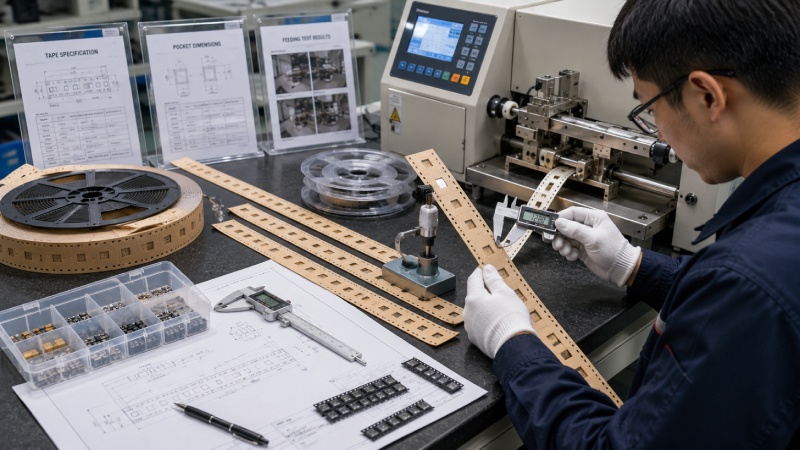
A trial sample is produced after the design and tooling are ready. The sample allows both parties to evaluate:
-
Component fit
-
Pocket shape
-
Tape flatness
-
Hole accuracy
-
Component movement
-
Paper dust or burrs
-
Cover tape sealing
-
Feeding performance
A small sample order does not always mean a short lead time. The setup and validation work may be similar to that required for a larger production order.
Stage 4: Validation and Approval
The buyer should test the sample with actual components and, when possible, the intended packaging or SMT equipment.
If the sample fails a feeding, sealing, dimensional, or component-retention test, the pocket design or tooling may need adjustment. The project cannot proceed to stable mass production until the sample is approved.
Approval time controlled by the buyer should be separated from the supplier’s manufacturing lead time.
Stage 5: Mass Production and Inspection
After written sample approval, the supplier schedules material preparation, punching, support-layer application, inspection, winding, and packaging.
Final checks may include pocket dimensions, pitch accuracy, sprocket-hole position, tape flatness, reel winding, surface cleanliness, and packaging condition.
The order can then be prepared for shipment.
Standard vs. Custom Paper Carrier Tape
| Factor | Existing or Standard Design | Fully Custom Design |
|---|---|---|
| Tooling | Existing | New or modified |
| Engineering review | Limited | Detailed |
| Sample approval | Sometimes simplified | Usually required |
| MOQ flexibility | Generally better | Depends on setup requirements |
| Lead time | Shorter | Longer |
| Best application | Common or repeat components | Unique dimensions or feeding needs |
Buyers should not choose a standard structure simply because it has a lower MOQ. The tape must first protect the component, maintain the correct orientation, seal reliably, and feed consistently.
Packaging performance should take priority over the smallest possible order quantity.
How to Reduce MOQ and Shorten Lead Time
Buyers can improve both quotation accuracy and project speed by preparing complete information before contacting the supplier.
Send Complete Component Data
Provide a 2D drawing, tolerance information, physical samples, packaging orientation, and feeder requirements. Photos alone are usually not sufficient for designing a reliable pocket.
Ask About Existing Tooling
A manufacturer with a broad tooling library may identify an existing or modifiable structure. This can reduce development time and avoid unnecessary new tooling.
Separate Samples from Production Orders
Define the project in stages:
-
Engineering sample
-
Pilot production quantity
-
Initial mass-production order
-
Forecasted repeat demand
This allows the design to be validated before the buyer commits to a larger quantity.
Avoid Late Specification Changes
Changing the tape width, pitch, pocket orientation, material thickness, or reel format after approval may require a new drawing, tool adjustment, or another sample run.
All departments should confirm the requirements before tooling begins.
Approve Drawings and Samples Promptly
Slow drawing reviews and internal testing can extend the total project schedule. Assign a responsible contact who can provide clear approval or consolidated feedback.
Provide a Demand Forecast
For repeat orders, a rolling forecast helps the supplier reserve material and machine capacity. Scheduled production may reduce urgent orders without requiring the buyer to hold excessive finished inventory.
Information Needed for an Accurate Quote
To receive a reliable paper carrier tape MOQ and lead-time estimate, prepare the following information:
-
Component name and application
-
Component drawing
-
Physical samples
-
Maximum and minimum dimensions
-
Packaging orientation
-
Required tape width and pitch
-
Paper thickness or pocket depth
-
Sprocket-hole requirements
-
Conductive or antistatic requirements
-
Bottom support requirements
-
Cover tape type
-
Reel diameter
-
Components per reel
-
Sample quantity
-
Initial production quantity
-
Monthly or annual demand
-
Required completion date
-
Delivery destination
-
Inspection or documentation requirements
Buyers who do not know the final tape dimensions can still request an evaluation. A capable supplier should be able to recommend a suitable structure based on the component and packaging conditions.
Questions to Ask the Supplier
Before confirming an order, ask:
-
Is the MOQ measured in meters, reels, kilograms, or order value?
-
Does the quotation use existing or new tooling?
-
Are tooling charges separate?
-
What stages are included in the stated lead time?
-
How long will sample preparation take?
-
Which tests are completed before approval?
-
Will the tooling be retained for repeat orders?
-
Can production be divided into scheduled deliveries?
-
What happens if the first sample needs revision?
-
How quickly can unchanged repeat orders be produced?
Clear answers make it easier to compare suppliers and identify hidden assumptions in a quotation.
Frequently Asked Questions
What is the typical MOQ for paper carrier tape?
The MOQ depends on the material, tape width, pocket design, tooling, reel format, and required processing. Existing designs and repeat orders usually offer greater flexibility than fully customized projects.
How long does custom paper carrier tape take to produce?
The total schedule may include requirement review, drawing approval, tooling, sample production, validation, mass production, inspection, and shipping. A supplier should provide separate timing for each relevant stage.
Can I order a small quantity for testing?
Many suppliers can discuss sample or pilot quantities, but small production volume does not eliminate tooling and setup work. Sample pricing and production MOQ may therefore be calculated separately.
Does every custom tape require new tooling?
No. Existing tooling may be suitable when the component dimensions and tape parameters are compatible. New or modified tooling is required when the pocket structure, pitch, orientation, or other critical dimensions differ.
What information is required to confirm MOQ and delivery time?
The most important inputs are the component drawing, physical samples, packaging orientation, expected quantity, tape requirements, and requested delivery date.
Request a Project-Specific MOQ and Lead-Time Evaluation
The most useful MOQ and lead-time estimate is based on the actual component rather than a general product category.
Send your component drawing, physical samples, required quantity, packaging requirements, and target delivery date. An engineering review can determine whether existing tooling is available, whether a new pocket design is required, and how the sample and production schedule should be planned.



 Emial
Emial John Mr